
Sourcing
Fiber Optic Cable Pricing: Cost Drivers & How to Cut
"Fiber optic cable pricing" hides two unrelated questions. One is what does a home fiber plan cost per month — the question most of the pages ranking for this keyword actually answer. The other is what drives the price of the cable itself, bought by the meter or the kilometer for a network build. This article answers the second one: the question a procurement lead, access-network engineer, or distributor gets a quote for.
Here is the whole shape of it in one breath: a meter of fiber optic cable is the sum of six cost buckets — raw materials, fiber grade, cable construction, order volume, certification, and freight. Some are negotiable on price; the rest you manage by changing what you buy, not by squeezing who you buy from. Get the buckets straight and the number stops looking arbitrary. If you want the manufacturing side first — how the glass, strength members, and jacket actually come together — our how fiber optic cable is made walkthrough is the companion to this piece. The fiber optic cable sourcing hub is the index to the whole cluster.
The line to keep: you cut fiber optic cable cost by changing the specification — grade, construction, fiber count, and volume — not by asking a supplier to use cheaper glass. The first lowers the price. The second lowers the network.
What Actually Drives Fiber Optic Cable Pricing: The Six Cost Buckets
Ask five suppliers to break down a quote and you will get five spreadsheets, but the category cost structure is stable. Procurement-side data groups the fiber optic cable category's spend into five buckets — and raw materials are the largest by far (Claight category intelligence on fiber optic cable procurement, accessed October 2026):
Cost bucket | Share of category spend | What it actually covers |
|---|---|---|
Raw materials | ~45% | Silica and the glass preform, dopants, buffer and jacket polymers, aramid/steel strength members |
Direct manufacturing & energy | ~25% | Drawing, coloring, cabling, jacketing; plant electricity and furnace energy |
Labor & technical engineering | ~15% | Line operators, in-process QC, process and test engineering |
Packaging & specialized reels | ~5% | Reels and spools, cartons, drum handling |
Logistics & freight | ~10% | Inbound material freight and outbound delivery of finished cable |
Those five are the accounting view of where the money goes. For a buyer, they resolve into six things you can actually act on: raw materials, fiber grade, cable construction, order volume, certification, and freight. Two of them dominate how the number moves, and neither is the bucket buyers instinctively attack: raw materials and the direct-manufacturing-and-energy step together are about 70% of category spend. Raw materials are the largest single bucket — and the glass starts, literally, as ultra-pure silica. Optical fiber is drawn from a glass preform: a purified glass rod with the core and cladding structure already baked in, heated in a drawing tower and pulled down to hair-thin fiber, with a protective polymer coating applied before it is wound onto a spool (RP Photonics Encyclopedia, fiber fabrication, accessed October 2026). That preform-and-draw stage is capital- and energy-intensive, and it is the part of the chain most exposed to input-price swings — which is where we go next.

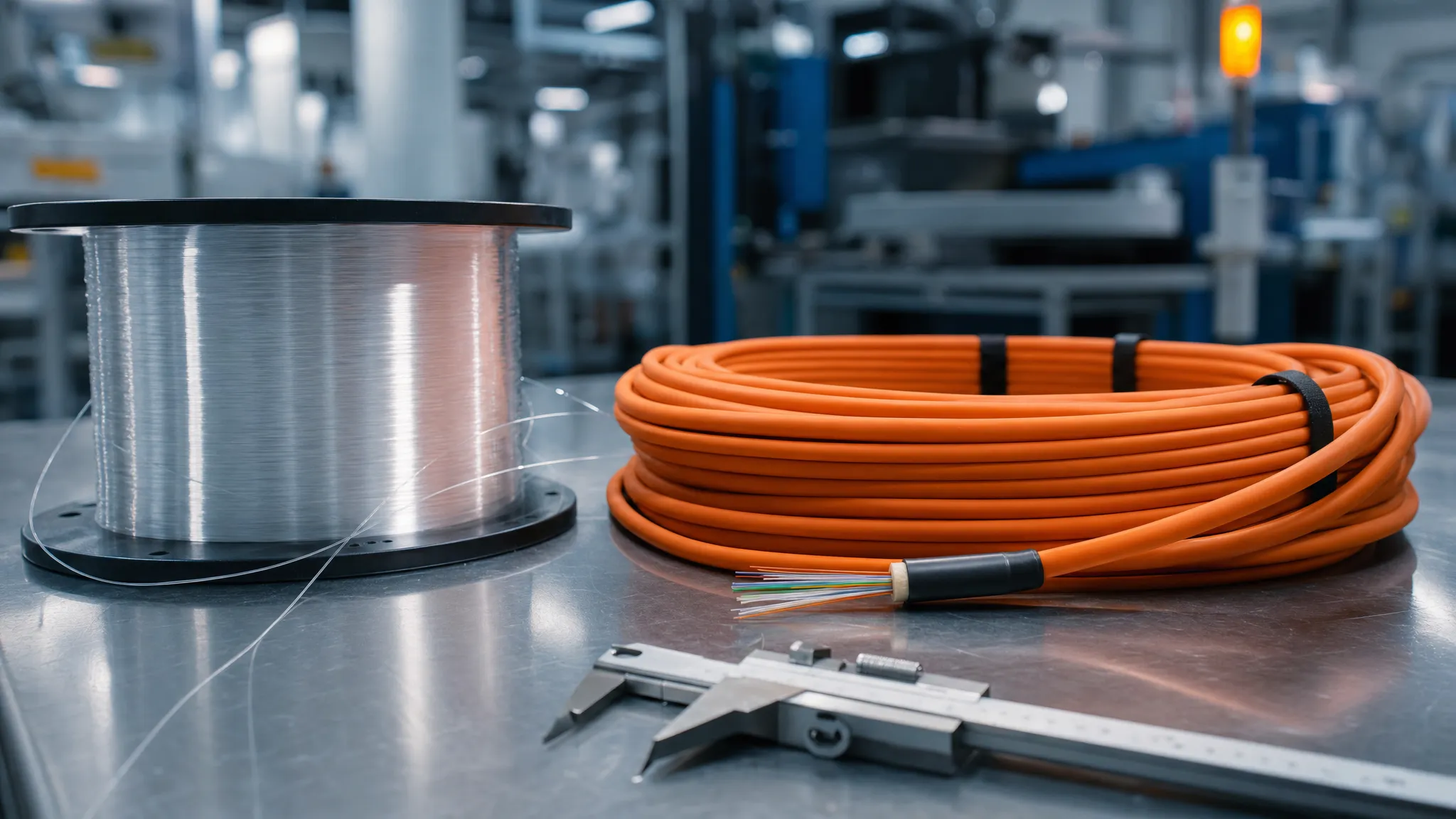
The first cost bucket up close: high-purity silica, jacket and buffer polymers, aramid yarn, and steel strength members. Everything downstream is built on these inputs.
The practical reading for a buyer: when a supplier says "the price went up," the honest question is which bucket moved. If it is raw materials, it moved for everyone and your leverage is timing and grade, not negotiation. If it is construction or volume, it is still yours to change.
Why the Price Moved in 2025–2026: Preform, Helium, and the Optical Fiber Index
For most of the previous decade, optical fiber pricing was flat-to-falling, and through 2025 it was merely stabilizing. That changed at the start of 2026. CRU, which prices wire and cable markets, introduced monthly optical fiber price reporting explicitly in response to market volatility: its global G.652 single-mode index tracked near a low of 78.6 in March 2025, firmed to about 88.7 by November 2025, then jumped to 107.9 in January 2026 and posted an unprecedented triple-digit rise in March 2026, reaching 263.0 — the sharpest move since CRU began monitoring in 2017 (CRU, monthly optical fibre price reporting, accessed October 2026).
The driver is upstream of the cable factory, and it is specific: preform availability. Tight preform supply has fed directly into higher fiber prices and into the index's sharp move (CRU, optical fibre prices rise as preform availability tightens, accessed October 2026). Cable makers buy fiber (or draw it from preform); when the fiber stage tightens, the effect lands on every cable that contains single-mode glass.
None of this is new physics, but the timing matters, and a US government analysis captures the same mechanism from the input side. The US International Trade Commission describes how fiber optic cable manufacturing begins with converting silicon tetrachloride and oxygen into optical glass and cooling the fragile strands with helium — and notes that prices for silicon tetrachloride rose by over 50% between 2021 and 2022 (a figure USITC attributes to CRU Group), while the US producer price index for fiber optic cable manufacturing climbed nearly 20% since December 2020 (USITC, "Sky-High Prices Contribute to Rising Fiber Optic Cable Costs", accessed October 2026).
Read those three facts together and the current market has a clear character: this is a raw-material and supply-availability market, not a manufacturing-efficiency market. The cable factories did not get worse at their jobs — the inputs at the front of the chain got tighter and dearer. For a buyer, that reframes the negotiation. Against a commodity input squeeze you cannot win on unit price alone, but you can win by locking volume earlier, matching grade to need (next section), and — if you serve a tariff-sensitive market — controlling origin. (If copper is still on your comparison sheet, the trade-offs are laid out in our fiber vs copper cable guide; the cost story there is a different curve entirely.)
Fiber Type and Grade: Where a Few Microns Move the Price
The fiber inside a cable is not a single commodity. The grade you specify sets a floor under the price before construction even starts.
Single-mode is the default for anything measured in kilometers. ITU-T Recommendation G.652 defines the standard single-mode fiber used across telecom, access, and metro networks; the widely specified G.652.D variant is the low-water-peak version, specified for operation across the extended 1260–1625 nm range (ITU tabulates its attenuation limits from 1310 nm) (accessed October 2026). Because single-mode fiber is made in enormous volume, the glass itself is often cheaper per meter than high-grade multimode — a fact that surprises buyers who assume "single mode" means "premium."
Bend-insensitive single-mode (G.657) costs a little more than plain G.652 and buys you tolerance to tight bends — the reason it dominates FTTH drop cable, where the fiber has to survive a corner in a wall box without adding loss.
Multimode is where the grade premium lives. OM3, OM4, and OM5 are laser-optimized 50 µm fibers with progressively higher effective modal bandwidth; the tighter bandwidth control in the higher grades is what you pay for, and it is why a laser-optimized grade costs more per meter than commodity single-mode glass.
Fiber type / grade | Typical use | Cost position |
|---|---|---|
OS2 single-mode, G.652.D | Metro, access, long-haul, duct and aerial backbone | Baseline; often the lowest glass cost per meter |
Single-mode, G.657.A1/A2 (bend-insensitive) | FTTH drop cable, tight indoor routing | Small premium over G.652 for bend tolerance |
OM3 multimode | 10G short reach, data center rows | Mid — laser-optimized, not commodity glass |
OM4 / OM5 multimode | 100G short reach; SWDM over fewer fibers | Higher — premium for bandwidth headroom |
The cost lesson is not "pick the cheapest grade." It is that grade is a specification decision with a price consequence — and that the most common overpay is buying bandwidth headroom a link will never use, or buying legacy multimode plant to avoid re-specifying to single-mode. (The full type taxonomy and where each belongs is in our fiber optic cable types guide; this article sticks to what each choice does to the price.)
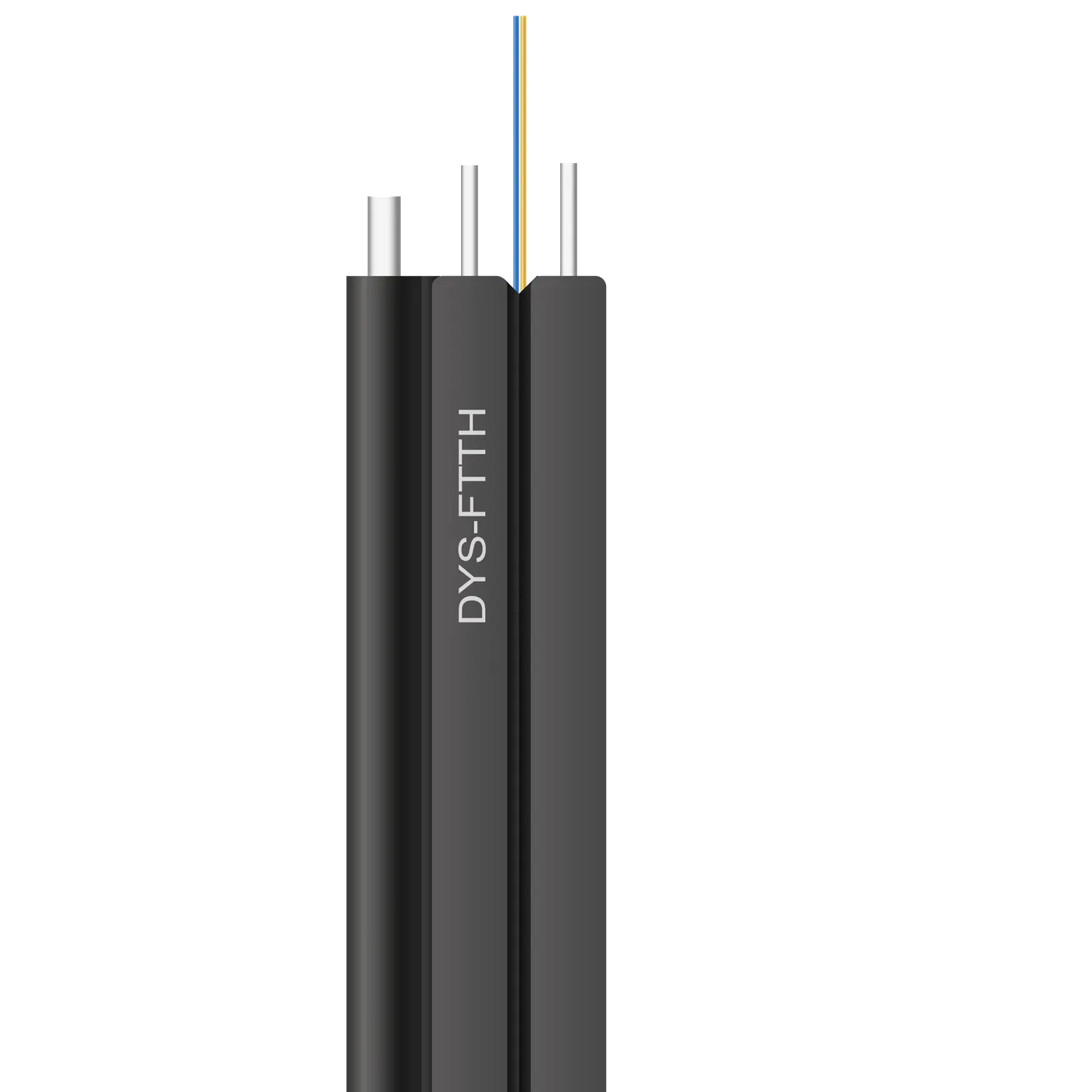
Grade in the field: a self-supporting flat drop cable — G.657 single-mode chosen for bend tolerance, the small premium that keeps an FTTH drop from failing at a corner.
Cable Construction: The Layers Between the Glass and the Invoice
Here is the bucket buyers underestimate most. The fiber is thin and cheap relative to the cable built around it — and almost every construction choice adds cost per meter.
The two families differ at the core: loose-tube construction gives each fiber room inside a gel- or dry-filled tube (rugged, standard for outdoor plant), while tight-buffered construction coats the fiber directly (simpler, common indoors). Then come the layers — buffer tubes, a strength member, a moisture barrier, and a jacket — each of which is a line item. Field-facing installation practice for these constructions is documented by The Fiber Optic Association's installation reference (accessed October 2026).
Construction choice | What it adds | Cost effect |
|---|---|---|
Loose tube vs. tight buffer | Protection and routing tolerance for outdoor/rugged plant | Loose tube costs more per meter; required where the cable is outside |
Jacket material: PE vs. LSZH | Fire performance for indoor/occupied spaces | LSZH compounds run above standard polyethylene |
Armoring (corrugated steel tape) | Rodent and crush protection | Adds material and weight — which also raises freight |
Aramid strength members | Tensile strength for aerial spans | Aramid is a premium input; longer spans need more |
Higher fiber count | More fibers per cable, more buffer tubes | Unit price rises, but cost per fiber falls (see order volume) |
Aerial vs. duct vs. direct burial | The environment the cable must survive | Each adds different jacketing/armoring — specify to the environment, not above it |
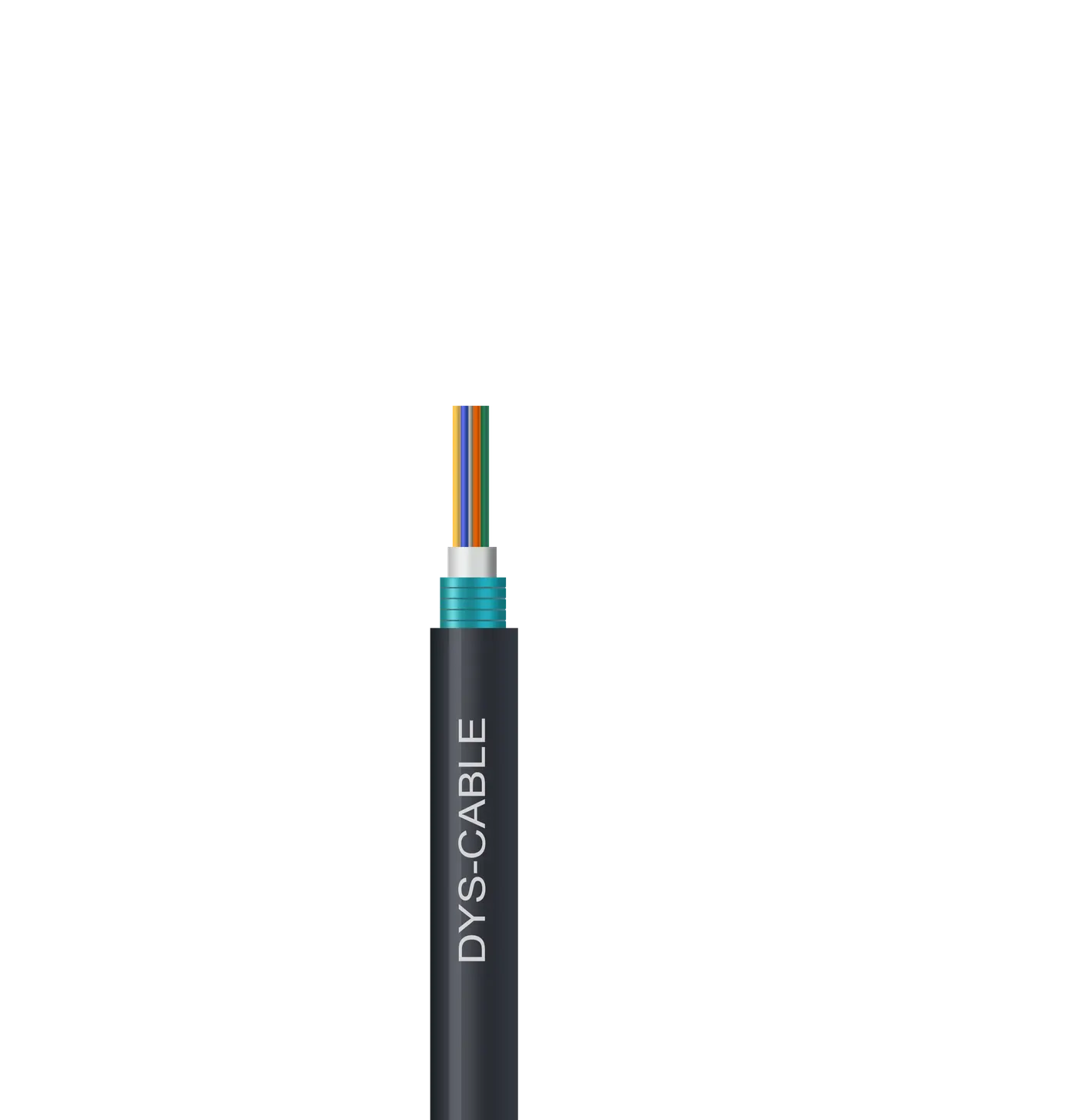
Loose-tube outdoor cable: the fiber is a small fraction of what you pay for. Buffer tubes, strength members, moisture barrier, and jacket are the rest of the invoice.
Two over-specification traps are worth flagging because they quietly inflate fiber optic cable price:
- Specifying LSZH everywhere. LSZH is essential where the cable runs indoors through occupied space, but the higher-priced compound is wasted on a duct or buried outdoor run. Match the jacket to the route.
- Armoring "just in case." Corrugated steel tape protects against rodents and crush, and it adds weight — which you pay for twice, once as material and again as freight. Specify armoring where the environment demands it, not as default insurance.
Fire-rating and jacket specifications are covered in depth in our OFNP, OFNR, and LSZH fire ratings guide; here the point is only that each rating you specify is a price you carry.
Order Volume, MOQ, and the Setup Surcharge
This is the bucket where how much you buy changes what you pay per meter — and it is the one most often left out of a pricing conversation.
Fiber optic cable is extruded on long lines. Starting a line and stabilizing it burns material during warm-up and calibration, so a short run carries a machine-setup penalty spread over fewer meters. Run the same line continuously for a full order and the per-meter price drops toward the factory's floor. That is the mechanical reason a one-kilometer order and a container-load order do not price the same way — the second one amortizes setup the first one cannot.
The fiber-count effect compounds it. A higher-count cable costs more per cable but less per fiber, because the expensive extrusion and jacketing work is shared across more strands. That is why the trailing cost of a 96- or 144-fiber cable can undercut a 24-fiber cable on a per-fiber basis — the "sweet spot" on a per-fiber price curve sits at the high counts for exactly this reason.
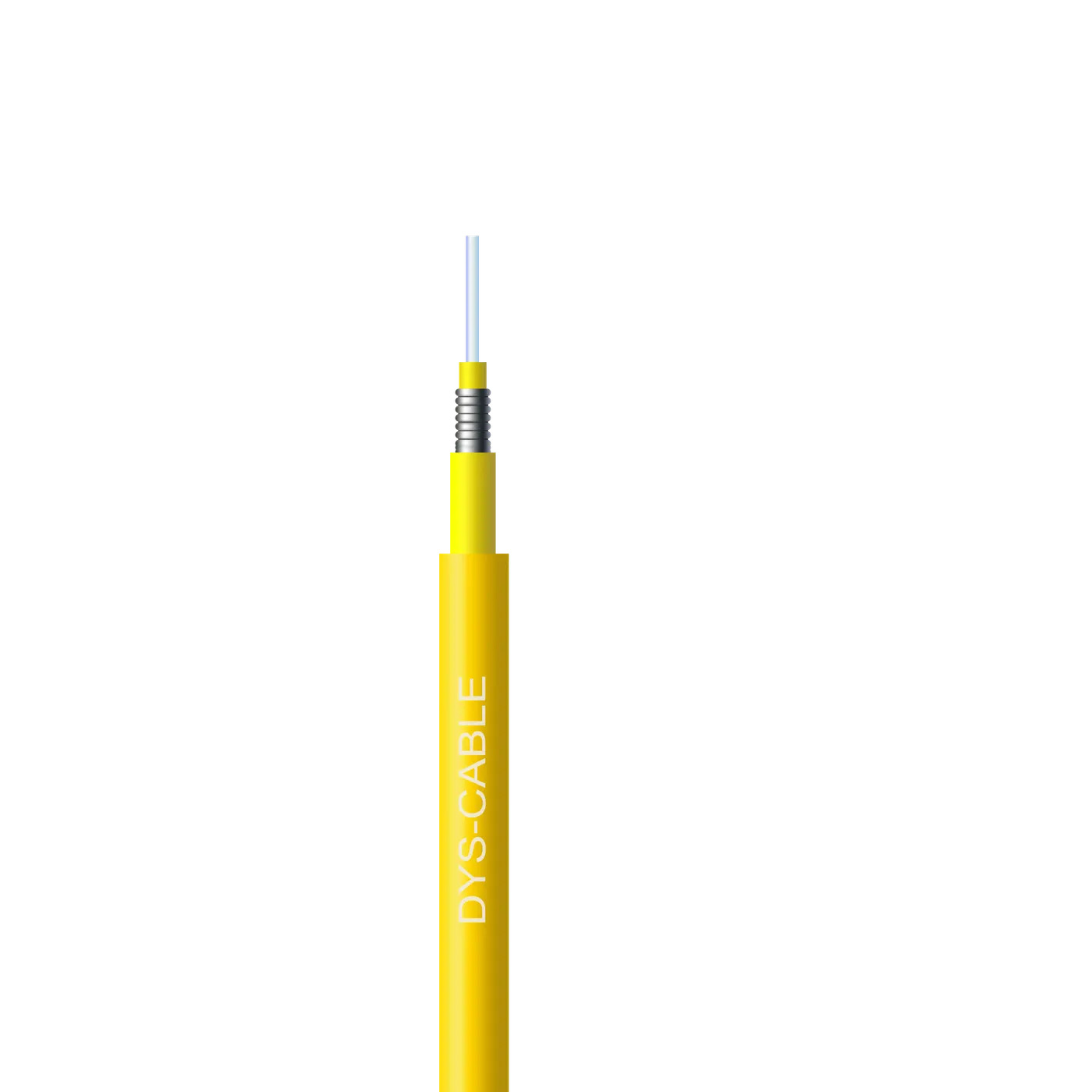
Armored round cable: material, weight, and manufacturing steps stack into the per-meter price — which is why structure and fiber count, not just the glass, set the quote.
There is also a channel effect buyers rarely see. A distributor's price carries margin, stocking, and handling that a factory-direct price does not — and it is not always worth paying, but it is also not always avoidable when you need local stock and fast delivery. The honest move is to know which layer you are buying from and price both where the order size justifies it.
Where volume discipline pays off: if a project needs 3 km but the 5 km price is materially lower per meter, buying the extra and stocking it is often cheaper than paying the small-order surcharge twice. That is a stock decision, not a quality one — and it is one of the simplest levers in this article to actually pull.
Put rough numbers on the mechanism — and treat this as illustrative arithmetic, not a quote. Suppose a line loses the first ~200 m of a run to warm-up and calibration. On a 3 km run that waste is amortized over 3,000 m; on a 30 km run it is spread over 30,000 m — a tenth of the per-meter penalty, before any volume discount. That is the whole logic of an MOQ: not a markup, but the setup cost divided by your order size. The same arithmetic works on the raw-material bucket — if materials are ~45% of category cost and the fiber input rises 10%, the unit price moves roughly 4–5% before anything else changes. Knowing which bucket moved, and by how much, is what turns a supplier's "prices are up" into a figure you can check.
An MOQ is not a markup. It is the machine's setup cost divided by your order size — which is why the same cable prices two ways at two volumes.
Certification, Testing, and the Cost of Trust
Certification is a cost bucket that looks like pure overhead until it saves you a re-pull. UL listings, CPR fire-performance classes, and RoHS declarations all require the supplier to test, document, and maintain conformity — and that work is priced into the cable. Verified test data per shipment (attenuation and the construction-relevant mechanical checks) is another line the cheapest suppliers skip.
The economics are straightforward: you pay a few percent more for a certified cable to avoid a failure that costs a re-pull. Outdoor plant failures are expensive out of all proportion to the cable price — trenching, splicing, and truck rolls dwarf the per-meter difference. That is the whole argument for not treating certification as a shopping line item.
It also gives you a concrete way to tell a cheap cable from a cheaper-to-make one. A supplier who cannot produce a UL listing verification, a CPR class, or per-shipment test data is not offering you a deal — they are shifting risk onto your project. How to check a supplier's UL listing directly is the subject of our supplier UL-listing verification guide.
Freight, Origin, and Landed Cost
The number on the quote is not the number you pay. Freight, duty, and origin together set your landed cost, and on heavy cable that gap is real.
Two levers dominate:
- Weight and packaging. Cable is sold on reels, and reel weight drives freight. Steel armoring and gel-filled loose tubes are heavier than they look; a construction choice made for field reasons also changes the shipping bill. Optimizing reel lengths and consolidating shipments reduces freight per meter without touching the cable itself.
- Origin and duty. For tariff-sensitive buyers, where the cable is made can matter more than a few percent of factory price. A non-China origin option exists specifically to let US and EU buyers manage tariff and origin exposure — the same construction can ship from a Vietnam plant with a different origin on the paperwork. (DYS Fiber Optic runs its third plant in Vietnam, alongside Huizhou and Mianyang in China, for exactly this reason.) The trade-offs between sourcing regions are covered in our China vs Vietnam fiber cable sourcing comparison; the pricing point here is that landed cost, not ex-works price, is the number to negotiate against.
Together with the raw-material squeeze from earlier, this is why two buyers can quote the same cable spec at visibly different landed prices and both be honest — they are buying at different origins, volumes, and freight terms.
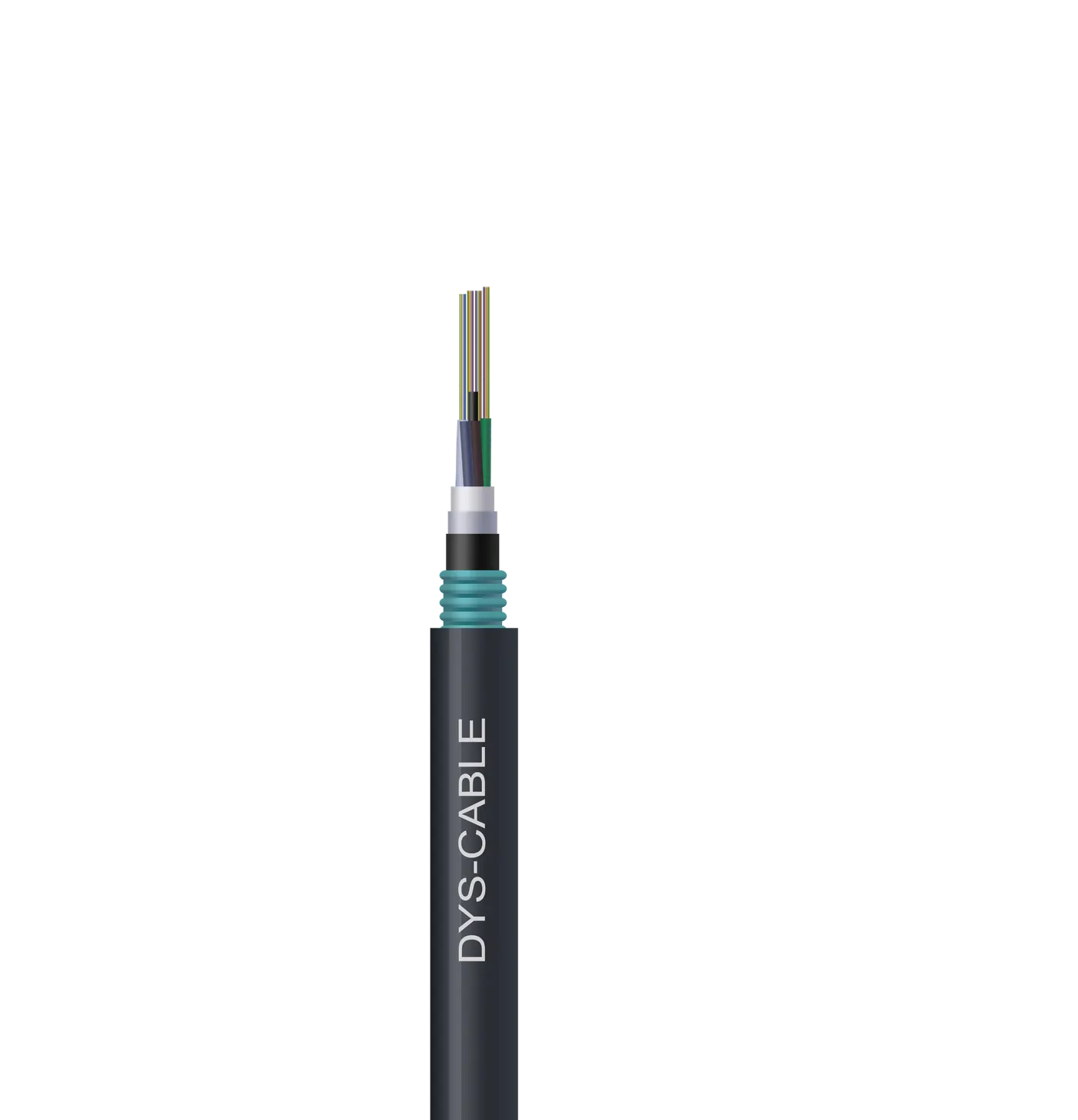
Armoring and jacket choices are also weight choices — and weight is the freight line sitting on top of your ex-works price.
What the Cable Price Leaves Out: Connectors, Termination, and Installation
The per-meter number is the price of the cable. Three things buyers routinely forget to price separately can swing a project's cost far more than a cent per meter:
- Connectors and termination hardware. Connectors, pigtails, adapters, and patch panels are a separate purchase from the cable. A pre-terminated assembly arrives with its connectors already factory-fitted — you pay for the hardware and the factory's termination labor, and you save the field time of terminating on site. Field termination moves that work, and its skill requirement, onto your crew. Which is cheaper depends on labor rates and volume, but the hardware is never free — and it is not inside the cable price.
- Field installation labor. The 15% labor line in the cost table is factory labor; the crew that ducts, pulls, splices, and tests the cable is a different budget entirely. On most builds, installation labor dwarfs the cable itself — a truck roll, a splice, and a re-pull cost far more than the meters involved. This is why "per meter" and "installed per meter" are two different numbers, and why a cheaper cable that is harder to install can end up costing more.
- Active equipment. The OLT, ONT, and the optics at each end are electronics, not cable — a separate line item entirely.
Getting this boundary right is most of the value in a cost conversation: the cable price is real, but it is not the project price. For the splice-versus-connector decision that sets the field-labor line, our splicing and connectorization comparison walks through the trade-offs.
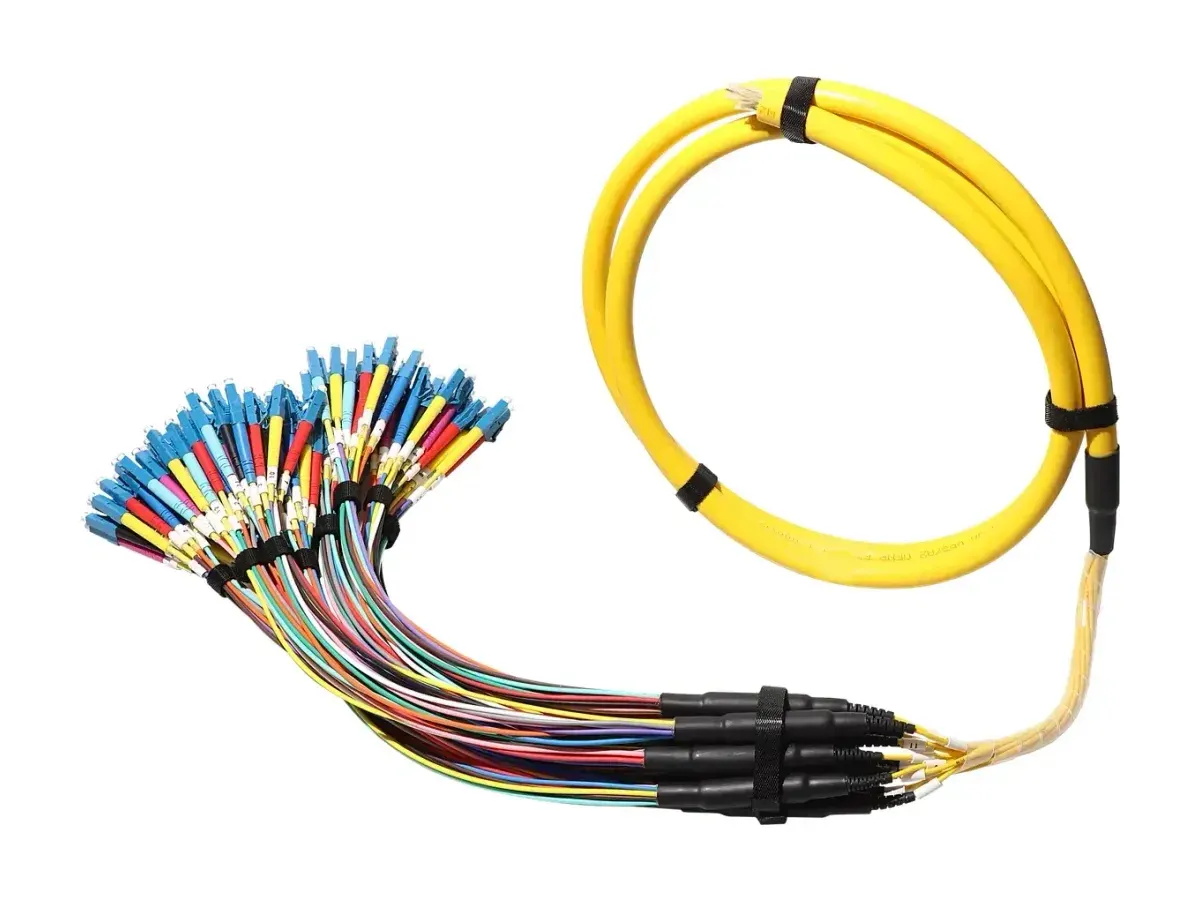
Termination is a separate purchase: the connectors, and the factory labor that fits them, are not inside the per-meter cable price.
How to Cut Fiber Optic Cable Cost Without Cutting Quality: 7 Levers
Everything above is diagnosis. This is the treatment. Seven levers, ordered by how much they usually return relative to effort — and note that not one of them saves money by degrading the glass.
Lever | What it saves | Risk to manage |
|---|---|---|
| Per-fiber cost falls at higher counts; you stop paying for strands you will never light | Leave documented spare capacity for growth, not a zero-margin count |
| Drops unnecessary LSZH, armoring, or over-thick sheathing | Get the environment classification right up front |
| Avoids paying for bandwidth headroom a link never uses | Confirm the link budget and future rate before downgrading grade |
| Amortizes machine setup; avoids the small-order surcharge | Carry the extra stock you buy, or the discount evaporates in storage |
| Fewer certifications, samples, and qualifications to duplicate | Keep a second qualified source for continuity |
| Lowers landed cost on tariff-sensitive routes | Verify the origin claim, not just the price |
| Avoids the re-pull that dwarfs the cable price | Really verify — samples, test data, and an audit |
Levers 1–3 are specification decisions; 4–6 are commercial decisions; 7 is the one that protects the other six. Customization cuts both ways here: a private-label or OEM run can lower your cost per unit through volume and standardization, but it raises the up-front engineering — the trade-off is spelled out in our OEM vs ODM in fiber optics guide.
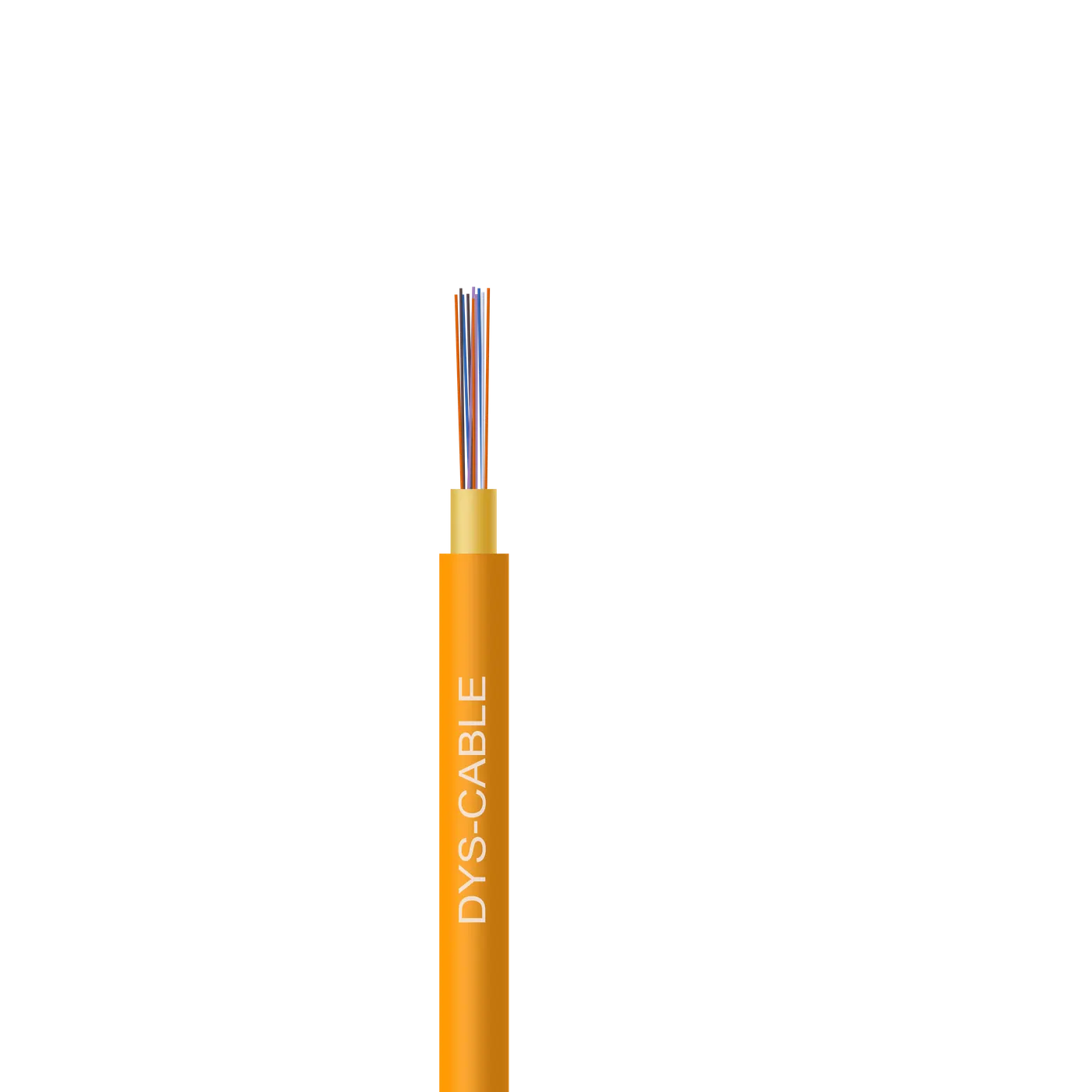
The fiber-count decision in miniature: more strands per cable costs more per cable but less per fiber — the mechanism behind right-sizing (lever 1).
Where a vertically integrated factory helps. When the cable maker also owns the mold, the injection workshop, the extrusion line, and the assembly line, a specification change (a different fiber count, a different jacket, a custom print) does not wait on an external supplier's tooling queue. That is a cost lever in disguise: the ability to move a spec without a long re-tooling lead time is what makes levers 1–3 practical instead of theoretical. DYS Fiber Optic runs extrusion, mold, injection, and assembly in-house across three factories (Huizhou, Mianyang, and Vietnam) and builds custom cable and assembly runs to spec. If the honest answer for your project is a standard construction at volume, we will say so — the point of a manufacturer's cost breakdown is to help you spend less, not to sell you the most expensive option on the line.
FAQs
What are the different types of fiber optic cable? Two axes matter for pricing. By fiber: single-mode (OS2, typically G.652.D or bend-insensitive G.657) and multimode (OM3/OM4/OM5). By construction: loose-tube vs. tight-buffered, indoor vs. outdoor, jacketed vs. armored, aerial vs. duct vs. direct-burial. Each choice on both axes has a price consequence — details in the sections above.
How much does 100 meters of fiber optic cable cost? There is no single number, and any page that gives you one is selling something. The same 100 m can differ several-fold depending on fiber grade, fiber count, jacket material, armoring, and — just as importantly — order volume, because a 100 m cut pays the full machine-setup penalty. Ask for a per-meter price at your target fiber count and construction, and ask what the per-meter price becomes at a full reel or container. Treat per-foot and per-meter figures you see online as indicative of the order they were quoted at, not as a benchmark for yours.
Is fiber optic cable pricing the same as the cost of fiber internet? No — and conflating them is the single most common mistake behind this keyword. A home "fiber internet cost" is a monthly service plan (the ISP's bandwidth, equipment, and support). Fiber optic cable pricing is the hardware price of the cable a network is built from, quoted per meter or per kilometer to operators, ISPs, integrators, and distributors. Different buyers, different numbers.
Will fiber optic cable increase my electric bill? The cable itself, no. Optical fiber is passive glass — it carries light and consumes no power. The electricity is on the electronics at each end (the OLT, ONT, router, and switches), whose draw is a small, normal equipment load and has nothing to do with the cable's construction or price.
The Number You Can Move
Fiber optic cable pricing looks opaque because most of what is quoted to you is a black-box price — a number with no cost breakdown behind it. Once you can see the six buckets, the number stops being a mystery and becomes a set of levers: grade and construction on the specification side, volume and origin on the commercial side, certification and verification as the floor you do not go below.
The workflow that follows is simple. Write down the six buckets. Ask your supplier which one moved. Change what you actually buy — count, grade, construction — before you try to win the price on the fourth decimal of a negotiation. And when you want the factory's own view of what your spec should cost, that is the conversation worth having. Send us your fiber count, construction, and target volume at our contact page and we will come back with the specification and the cost breakdown we would put behind it — including where we would tell you to spend less.