

FTTA / 5G
FTTA Cable Assemblies: ODVA vs NSN vs FullAXS vs PDLC
FTTA cable assemblies are the fiber jumpers that carry 4G and 5G fronthaul signals from the baseband unit at the bottom of a cell tower to the remote radio heads at the top — and the waterproof connector on each end is the part most likely to fail in the field. Four connector types dominate tower deployments: ODVA, NSN Boot, FullAXS-style, and PDLC. None is objectively best; each solves a different constraint. ODVA gives you field termination and industrial-LC intermateability, NSN Boot follows the radio vendor's ecosystem, FullAXS-style designs open the bulkhead for direct SFP access, and PDLC stays compact on standard LC adapters. This guide compares all four on the same criteria so you can match the connector to your tower and your maintenance routine.
The Four Connector Standards, at a Glance
Before comparing, it helps to know what these names are. ODVA, NSN Boot, FullAXS and PDLC are not one unified standard — they are outdoor connector families that trace back to the ecosystems that made them common: the industrial-LC interface for ODVA, Nokia's radio hardware for the NSN boot style, TE Connectivity's FullAXS Mini for the open-bulkhead design, and the standard DLC-to-LC mating for PDLC. What they share is the job: sealing a fiber termination against weather at a tower site, where rain, UV, salt, and temperature swings would quietly kill an indoor connector.
Judging them fairly means using the same criteria for each. We compared four: sealing grade, interface standard, cable diameter range, and the practical differences that show up in deployment — fiber count, termination method, and whether a technician can reach the SFP without breaking the seal. Sealing grades follow the IP Code: IP68 means dust-tight and protected against continuous submersion, while IP65 means dust-tight and protected against water jets — a real difference for tower-top hardware.
Connector type | Sealing | Interface / standard | Cable Ø range | Best for |
|---|---|---|---|---|
ODVA (SC / LC / MPO) | IP68 | Industrial LC per IEC 61076-3-106 | 4.8 – 7.0 mm | Field-terminable, intermateable outdoor runs |
NSN Boot Duplex LC | IP65 | LC per IEC 61754-20 | 4.8 – 7.0 mm | 1–3 fiber pairs where the radio ecosystem specifies NSN-style boots |
FullAXS-style (DYS FULLX LC) | IP68 | LC, open bulkhead | 4.8 – 7.0 mm | Direct SFP access for fast maintenance |
PDLC | IP68 | Standard DLC ↔ standard LC adapter | 7.0 mm | Compact deployments on standard LC adapters |
What an FTTA Cable Assembly Is and Why the Connector Matters
Fiber-to-the-antenna (FTTA) moves the radio signal processing away from the antenna: a baseband unit (BBU) sits at the bottom of the tower, and remote radio heads (RRHs) sit at the top, close to the antenna. The link between them is fiber, and in most 4G builds — and many 5G builds — that link carries CPRI (Common Public Radio Interface) — or its 5G successor eCPRI — signals, a digital fronthaul protocol that tolerates very little optical loss.
The cable run itself is the easy part. The FTTA cable family — indoor/outdoor and waterproof variants with aramid strength members and small 2.0 mm subcables — is built to survive tower conditions. The connector is where deployments actually fail: every tower-top connection is exposed to UV, wind-driven rain, thermal cycling, and vibration from the antennas themselves. A failed termination means a truck roll — a technician climbing the tower to re-terminate or swap a jumper, at a cost that dwarfs the price of the connector.
That is why the waterproof connector choice matters more than the cable choice. It is also why the four families below exist: different operators and different radio vendors standardized on different sealing and mating approaches, and the ecosystem you already run will often decide the connector for you.
ODVA Connectors: Field-Terminable and Intermatable
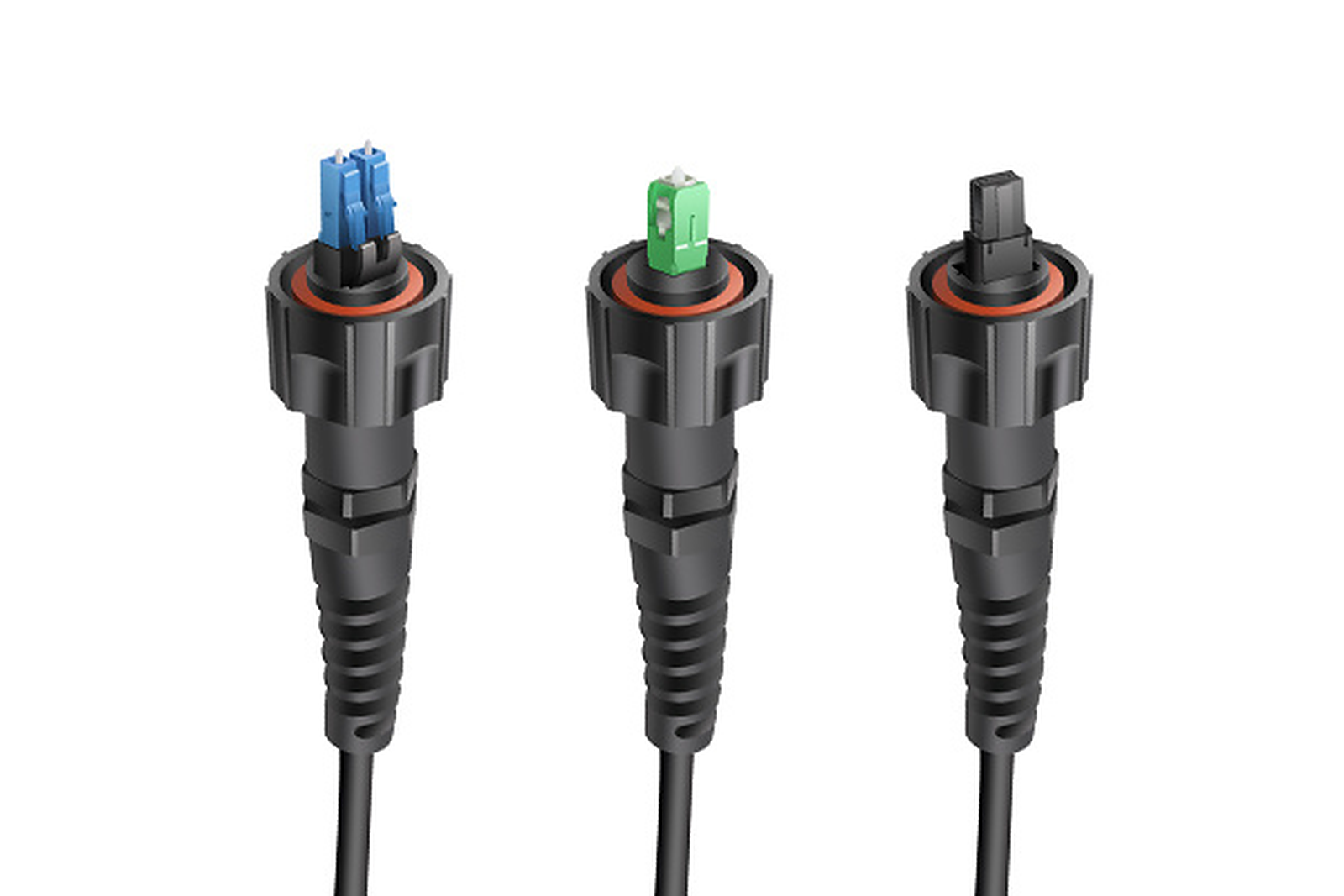
The ODVA is an IP68 outdoor assembly available in SC, LC, and MPO interfaces, built for the connection between the distribution box and the RRH. Its defining traits are two: it intermates with industrial-LC adapters per IEC 61076-3-106, and it installs and removes without special tools — field termination without a fusion splicer on site. Specs from DYS's product data: salt-mist and humidity protection, an outside-plant storage range of -40 to +85 °C, single-mode and multimode variants, insertion loss ≤0.15 dB typical / 0.3 dB max, and return loss ≥50 dB (UPC) / ≥60 dB (APC). It is a multi-purpose outdoor connector, also used in renewable energy and oil-and-gas links.
The honest limits: intermateability per IEC 61076-3-106 applies at the adapter-interface level — if you plan to mix complete ODVA assemblies from different brands, test the mated pair's insertion loss before committing, because end-face geometry and boot sealing still vary between manufacturers. And IP68 protects the mated connection; the rating assumes the assembly is properly seated.
See the DYS ODVA connector product page for the full spec table.
The ODVA connector: IP68-sealed industrial-LC interface, field-terminable without special tools.
NSN Boot Duplex LC: The Radio Vendor Standard
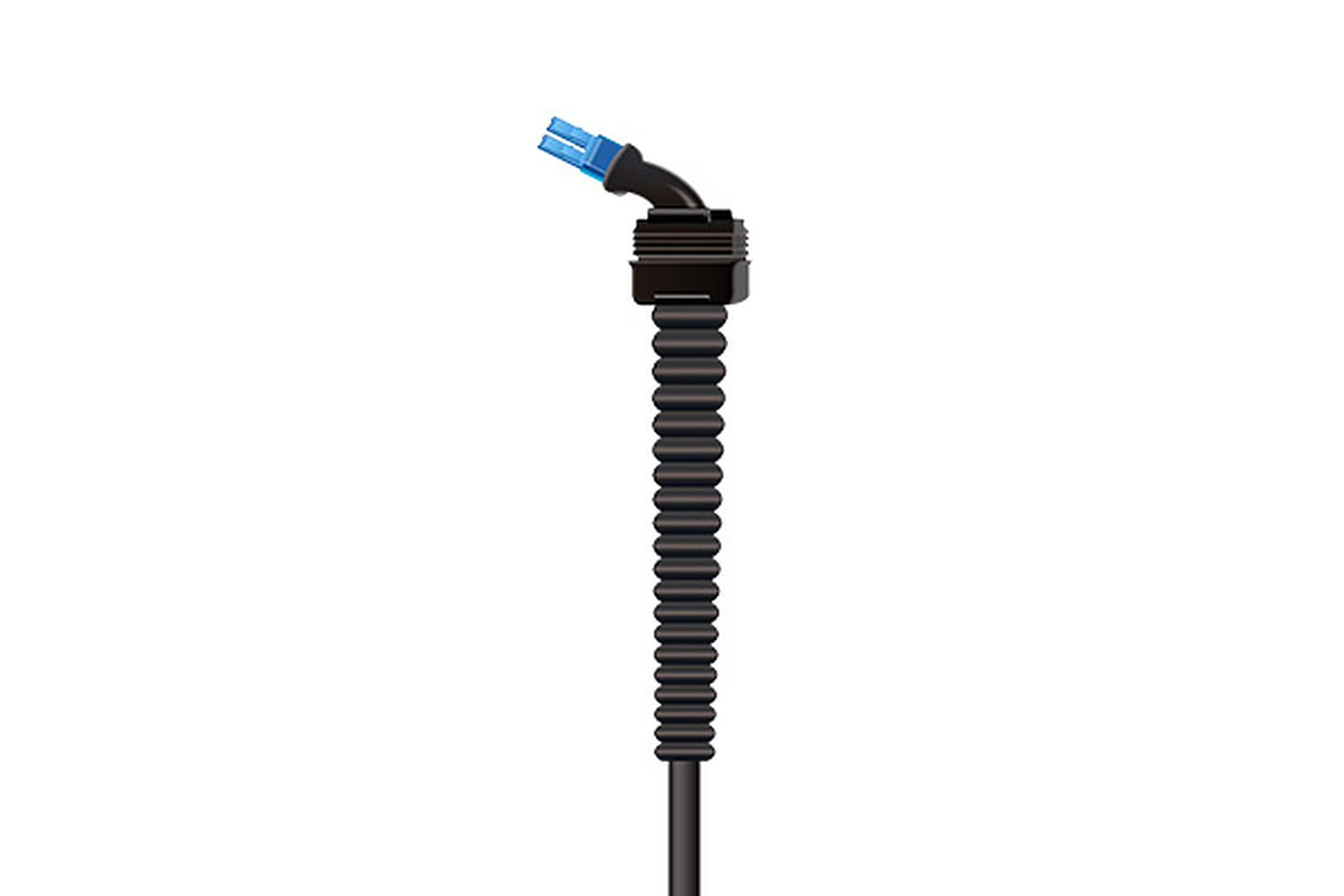
The NSN Boot Duplex LC traces to Nokia (formerly Nokia Siemens Networks) radio hardware, where this boot style became the default for distribution-box-to-RRH jumpers. It is an IP65-rated assembly carrying 1 to 3 fiber pairs, with LC or vendor-specified connectors, a UV-resistant outer sheath, and mechanical performance built to IEC 61754-20. The end-face geometry is specified to exceed IEC and GR-326 requirements, and the materials are RoHS and REACH compliant. Cable diameter range is 4.8 to 7.0 mm, with the same insertion-loss and return-loss envelope as the ODVA family.
The honest limits are about environment and ecosystem. IP65 is a water-jet rating, not a submersion rating — fine for a protected tower position or an enclosed distribution box, but if the connection sits in a spot that collects standing water, an IP68 family is the safer call. And because the NSN boot style follows a radio vendor's interface requirements, the first check before choosing it is your equipment: confirm the boot and connector style your RRU or distribution box is specified for, rather than assuming one NSN-style boot fits every radio generation.
See the DYS NSN Boot Duplex LC product page for the full spec table.
The NSN Boot Duplex LC: IP65, 1–3 fiber pairs, built to IEC 61754-20 for radio-ecosystem deployments.
FullAXS-Style Connectors: Open Bulkhead for SFP Access
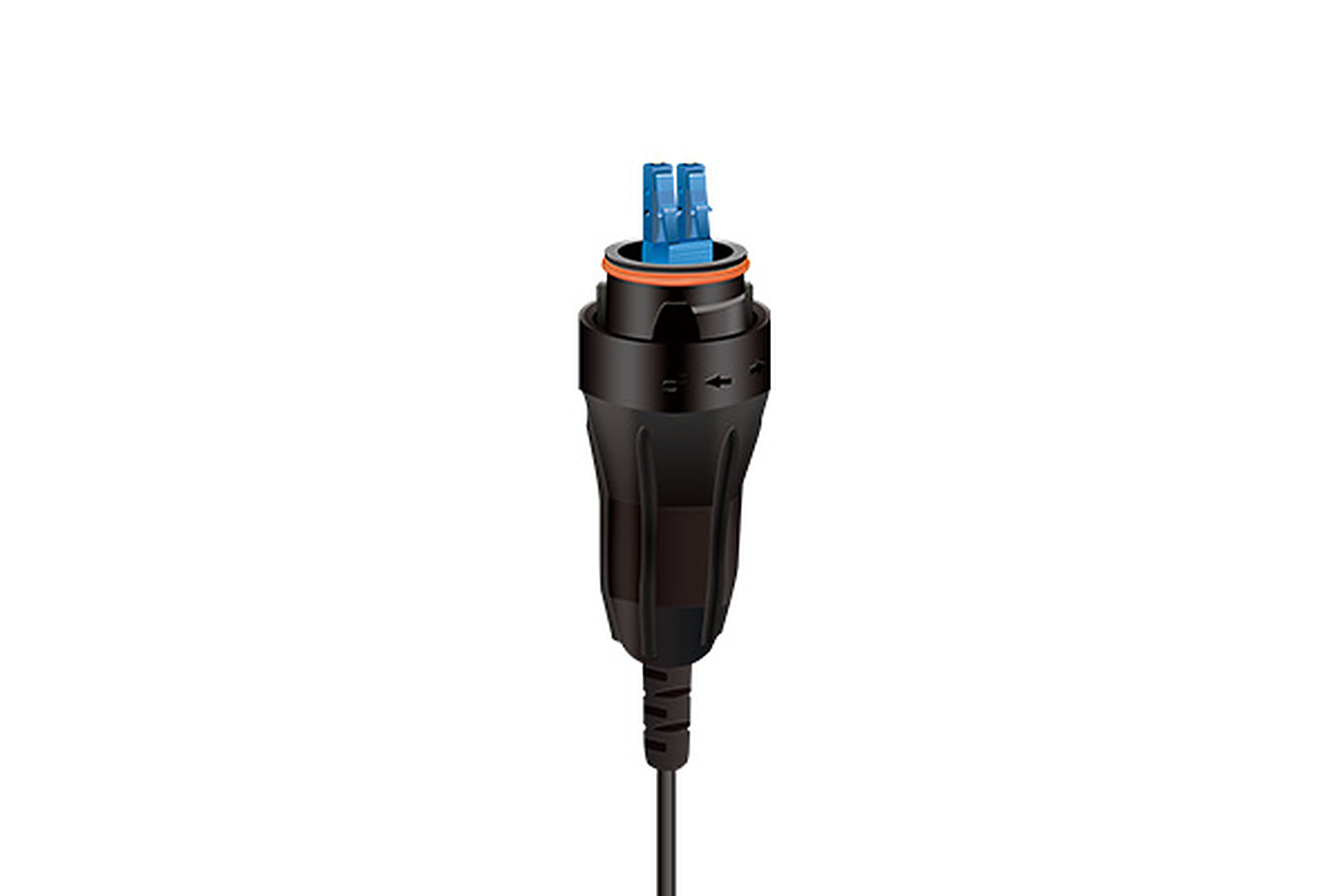
The FullAXS-style family solves a maintenance problem: on many radio units the SFP transceiver sits behind the connector bulkhead, and reaching it means breaking the seal. The open-bulkhead design — popularized by TE Connectivity's FullAXS Mini system — gives the technician direct access to the SFP without unbolting the whole assembly. The DYS implementation, the FULLX LC, is an IP68-rated assembly in a lightweight metal hard housing with low insertion and return loss, humidity- and dust-proof, suited to FTTA, base station, WiMAX and LTE sites, and industrial outdoor applications.
One point of honesty about naming: FullAXS is TE Connectivity's registered product name for its FullAXS Mini connector system. DYS builds the same form-factor family under the name FULLX LC, with the same open-bulkhead SFP-access concept — but we do not claim intermateability with TE's components. If you are retrofitting a site built around genuine TE hardware, verify compatibility with a sample before ordering at scale.
See the DYS FULLX LC product page for the full spec table.
The FullAXS-style FULLX LC: open bulkhead lets technicians reach the SFP without breaking the seal.
PDLC Connectors: Compact DLC That Mates With Standard LC Adapters
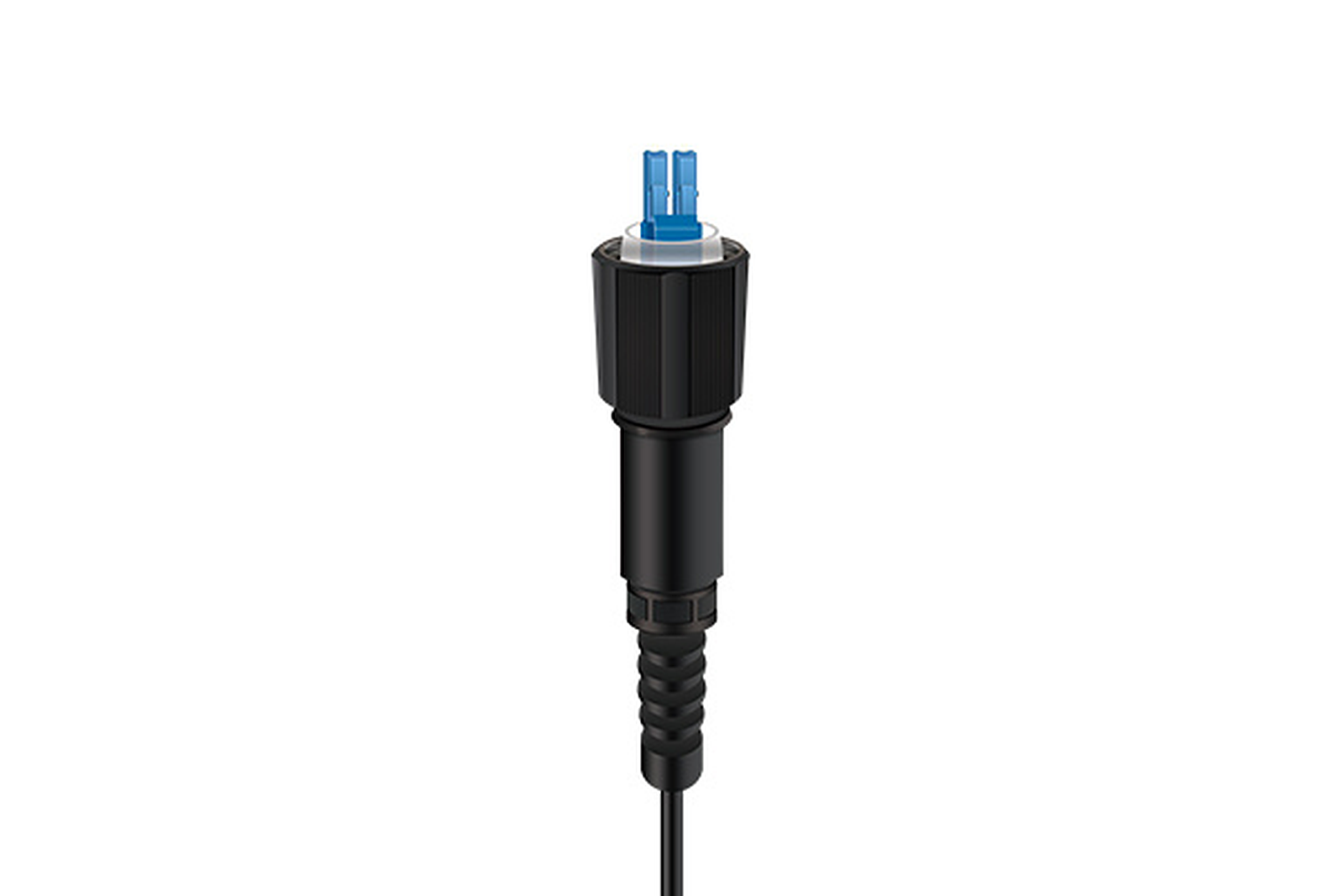
The PDLC takes the opposite approach from the metal-housed FullAXS-style: instead of a proprietary bulkhead, it uses a standard DLC connector that mates with standard LC adapters — the most common adapter in the industry. That makes it a cost-effective, easy-to-install choice for distribution-box-to-RRH connections, with IP68 sealing, single-mode and multimode options, a compact form factor, and a broad temperature range. Its specified cable diameter is 7.0 mm, with the same ≤0.15/0.3 dB insertion-loss as the other DYS families and, on single-mode, the same ≥50/60 dB return-loss envelope (multimode: ≥30 dB).
The honest trade-off is the form factor itself. The compact DLC design trades the rugged metal shell of a FullAXS-style connector for simplicity and adapter ubiquity — right for most tower runs, but if your site needs the extra mechanical rigidity of a hard housing or frequent SFP-level access, one of the other families fits better. And because the PDLC mates with standard LC adapters, the quality of the adapter in your distribution box becomes part of the connection: use adapters from a supplier with consistent ferrule tolerances.
See the DYS PDLC connector product page for the full spec table.
The PDLC: compact, IP68, and built around the standard DLC-to-LC adapter mating.
How to Choose: Match the Connector to the Tower
There is no universal winner — there is the connector that matches your deployment. Work through these in order:
- Follow the equipment first. If your radio vendor or distribution box specifies a boot or connector style, that wins. NSN-style boots are common on Nokia-specified builds; a box built around industrial-LC adapters points to ODVA; standard LC adapters point to PDLC.
- Ask how maintenance happens. If technicians regularly swap SFPs or re-terminate on site, an open-bulkhead FullAXS-style assembly or a tool-free ODVA saves real truck-roll time.
- Match the seal to the exposure. Coastal sites, flood-prone cabinets, and exposed tower-top positions argue for IP68 (ODVA, FullAXS-style, PDLC). A protected position can run IP65 (NSN Boot) without risk.
- Check the cable. The assembly's cable diameter range must fit your chosen FTTA cable; a 2.0 mm subcable build pairs naturally with assemblies rated down to 4.8 mm cable.
- Test before you standardize. Standards like IEC 61754-20 and IEC 61076-3-106 define interface geometry, not complete-assembly behavior. Request samples of the mated connector-adapter pair and verify insertion loss and sealing in your own rig before a volume order.
For a broader view of how the whole FTTA cabling system fits together — from the BBU cabinet to the antenna feed — the system-level documentation from established FTTA suppliers is worth reading alongside this guide.
Where to Get FTTA Cable Assemblies Built to Your Spec
DYS Fiber Optic manufactures all four connector families in-house — ODVA, NSN Boot, FULLX (FullAXS-style), and PDLC — across an FTTX waterproof assembly line rated at 5,000 terminations per day, under ISO 9001 and TL 9000 quality systems. Because the factory controls cable, connector, and assembly, a custom spec — fiber count, length tolerance, jacket material, or private label — is a drawing away rather than a sourcing project. Every assembly is 100% tested before shipment, with insertion-loss and return-loss test reports available on request, and samples for mating tests are available before you commit. Pricing for FTTA cable assemblies is quote-based rather than published — as of August 2026, request current pricing and lead times with your specification.
Request a quote on the DYS FTTA solution page — the team answers RFQs within 24 hours.
The Bottom Line
If you need field termination and intermateability, pick ODVA. If the radio ecosystem specifies it, pick NSN Boot. If your technicians live inside the SFP, pick FullAXS-style. If you want the simplest compact build on standard LC adapters, pick PDLC. All four are proven outdoor designs; the difference is which constraint you optimize. This comparison is part of the broader FTTA and 5G fiber guide, which walks through the full tower fiber path — from CPRI links to waterproof connectors — for 4G and 5G builds.