
Sourcing
Top Fiber Optic Cable Manufacturers in the USA (2026)
Every year someone publishes another list of the "top" fiber optic cable manufacturers. Most of those lists are written by manufacturers ranking themselves, reuse data from 2020, or rank by revenue without asking whether a company can actually serve your project. This guide ranks the top fiber optic cable manufacturers in the USA and the global alternatives worth sourcing from using five evaluation criteria: certifications and compliance, test data and quality control, factory audits and traceability, OEM/ODM capability, and capacity and delivery.
Here are the names to know in 2026: Corning, Prysmian, OFS (now Lightera), CommScope, AFL, and Optical Cable Corporation lead the US landscape, while YOFC, Hengtong, and FiberHome are the global giants, and DYS Fiber Optic represents the OEM/ODM tier that supplies most mid-size US importers. There is no single best manufacturer — pick by job, not by name recognition.
Why most "top manufacturer" lists mislead buyers
Before the names, the caveats. Three failure modes show up in nearly every ranking you'll find for this query:
- No methodology. "Top" is asserted, never defined. Is it fiber volume? Revenue? Patents? The list itself never says, which means you can't verify the ranking or defend it in a procurement meeting.
- Stale data. The highest-ranking result for this exact search is a December 2020 stock-market list, and several 2023 "best of" articles still circulate unchanged. In an industry where OFNP, OFNR, and LSZH fire ratings and factory footprints change yearly, a three-year-old list is not a sourcing document.
- Self-interest. A striking share of the top-ranked "top 10" articles are published by fiber optic cable companies that rank themselves — one US list places the publisher at #10, with no disclosure. That's not independent research; it's a brochure.
What these lists almost never contain is the information an actual buyer needs: how to verify certifications, what test data to demand, how to audit a factory, what MOQ and lead-time reality looks like, and whether an OEM/ODM path makes sense for custom specs. That's the gap this article fills.
How we ranked them: a five-criteria evaluation framework
We evaluated every manufacturer below against the same five criteria. Use the same framework when you compare quotes from shortlisted suppliers.
1. Certifications and compliance. The big three US-relevant marks are UL (OFNP/OFNR fire ratings for plenum and riser cable), CPR (the EU Construction Products Regulation classes B2ca, DCa, and ECA), and Anatel for Brazil; telecom buyers also look for TL 9000 and ISO 9001/14001. Certificates are easy to claim and harder to verify — see how to verify a supplier's UL listing before you accept a PDF as proof.
2. Test data and quality control. Quality programs mean nothing without evidence. Ask for OTDR traces and insertion-loss data from actual production batches, not a marketing datasheet. The strongest suppliers run 100% pre-shipment testing and maintain in-house reliability labs (temperature cycling, salt spray, tensile, bending) rather than relying on outsourced spot checks.
3. Factory audits and traceability. On an audit visit, look at three things: the production line (is the equipment current, is the floor organized), the QC lab (are test stations staffed and calibrated), and the warehouse (is material traceable from incoming fiber to finished drums). No travel budget? Video audits and dated production photos are a reasonable first pass.
4. OEM/ODM capability. If you need custom jacket material or color, specific fiber counts — single-mode or multimode — custom printing and labeling, or packaging designed for your market, the manufacturer's customization depth matters as much as its price per km. In-house mold and injection capability is the differentiator that separates real OEM/ODM partners from resellers.
5. Capacity, lead time, and supply chain. Daily cable output, multi-factory footprints, and origin of manufacturing determine whether a supplier can actually deliver on your schedule — and whether your import duties apply. Origin has become a first-order decision variable, which we dig into in the global section below.
One transparency note: the profiles below reflect public information available in August 2026. We did not independently audit any factory for this article, and certification scope, plant locations, and commercial terms change — verify everything directly with the supplier before committing.
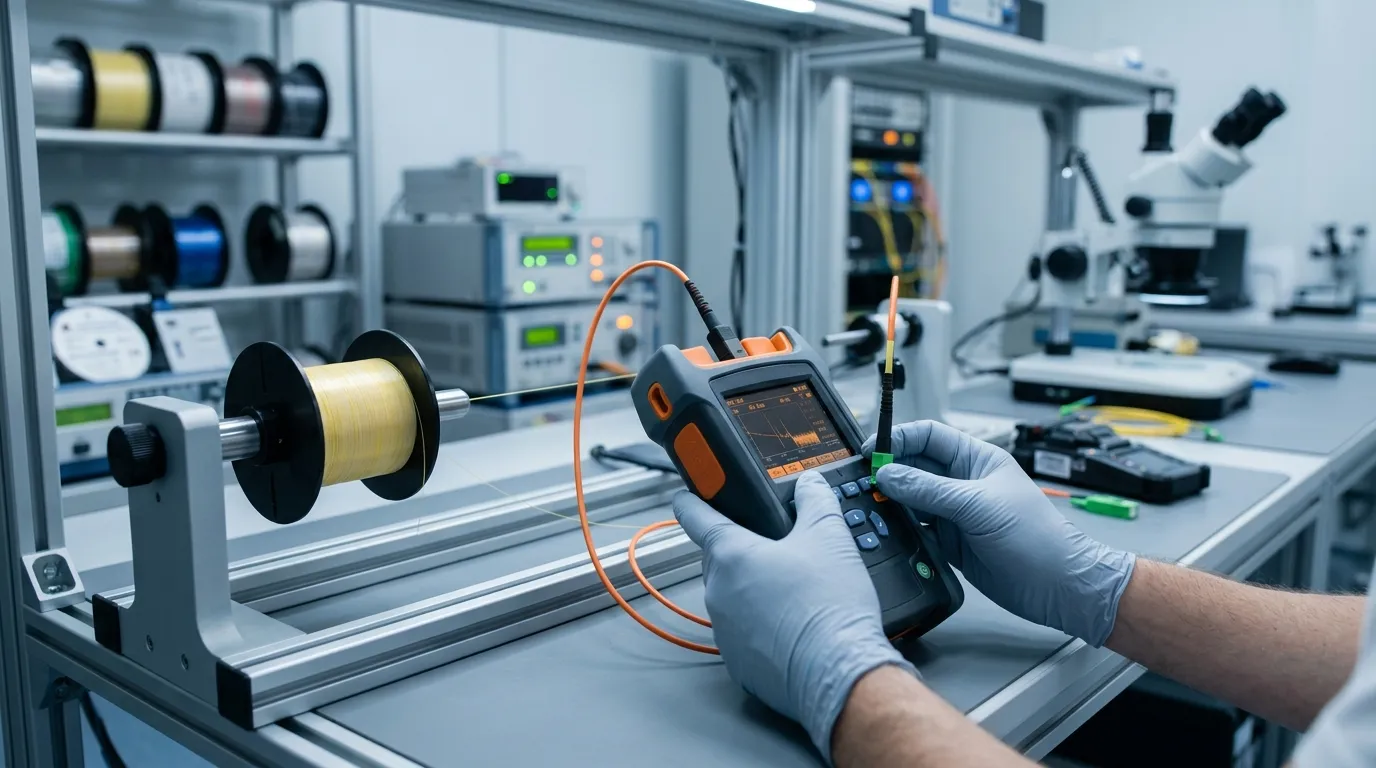
QC test stations are where certification claims meet reality — ask for batch test data, not marketing sheets.
Top fiber optic cable manufacturers in the USA
Fiber optic cable manufacturers in the USA split into two tiers: vertically integrated fiber giants that draw their own optical fiber and then cable it, and cable-and-connectivity specialists. We sorted the list by depth of vertical integration and US manufacturing footprint, not by revenue.
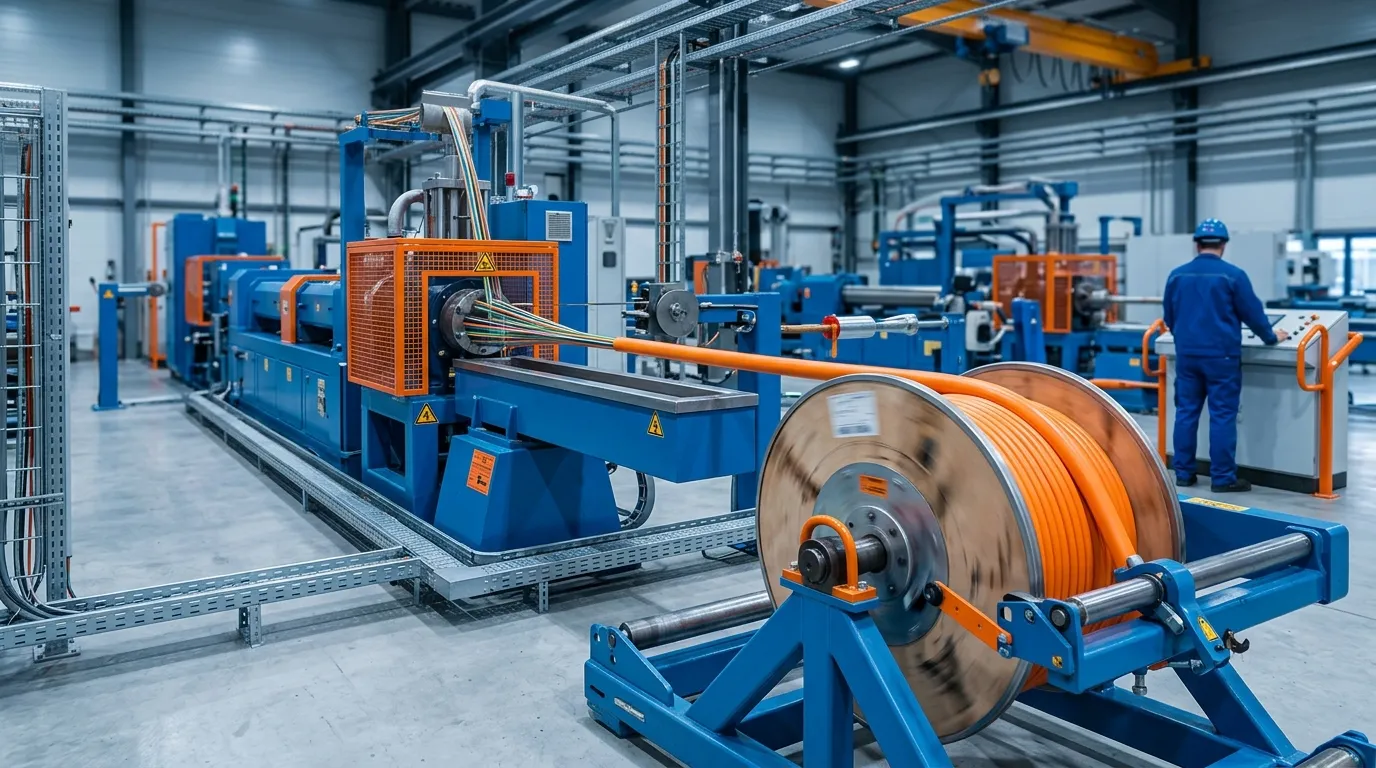
Production-line scale separates full-line manufacturers from assembly-only suppliers — capacity data is a ranking criterion, not a marketing claim.
Corning — the full-line fiber leader
Corning, founded in 1851 and headquartered in Corning, New York, is widely regarded as the world's largest producer of optical fiber, and it makes both fiber and cable at US plants. Its optical communications business spans carriers, data centers, and OEMs with a depth of engineered product that no other US name matches. Best for: large-scale carrier and OSP deployments, engineered fiber designs, and data center projects where performance specs dominate. Honest limitation: premium pricing and a sales model geared to large accounts — small and mid-size buyers often find the process, and the minimums, built around big contracts.
Prysmian — the global cable powerhouse with US manufacturing
Prysmian is the world's largest cable manufacturer by revenue, and it operates substantial US manufacturing alongside its Italian headquarters. Its North American business spans energy and telecom cable, with deep R&D and a global supply chain behind it. Best for: large projects that mix power and communications infrastructure, where one supplier can cover both worlds. Honest limitation: fiber cable is one product line inside an enormous energy-focused portfolio, and big-company lead times and process rigidity can frustrate smaller buyers.
OFS (now Lightera) — Bell Labs heritage, fresh branding
OFS, the US fiber business that traces its lineage through Bell Labs and Lucent, now operates under Furukawa's Lightera brand — as of mid-2026, ofsoptics.com redirects to lightera.com, and most 2023-era lists still use the old name. The company continues to draw fiber in the US and offers some of the industry's most engineered specialty fiber. Best for: specialty and engineered fiber requirements, and buyers who want US-made fiber with a defined technical pedigree. Honest limitation: the cable portfolio is narrower than Corning's full line, and the ongoing rebrand creates short-term documentation and channel churn you should budget for.
CommScope — the end-to-end network infrastructure house
CommScope, headquartered in Hickory, North Carolina, manufactures fiber optic cable alongside one of the industry's broadest connectivity portfolios — panels, connectors, antennas, and structured cabling systems for broadband, enterprise, and wireless networks (see the CommScope product range). Best for: end-to-end network infrastructure bundles where buying cable, connectivity, and hardware from one vendor simplifies logistics. Honest limitation: a powerful distribution model and large-account orientation; direct engagement and small-batch flexibility are weaker than at specialists.
AFL — the construction crew's favorite
AFL, a Fujikura subsidiary based in Duncan, South Carolina, pairs fiber optic cable with fusion splicers, test and inspection equipment, and outside-plant accessories — the toolkit a network construction crew actually uses in the field (AFL fiber optic solutions). Best for: integrators and installation contractors who want cable plus splicing and testing gear from one source. Honest limitation: the brand is splicer-first; cable is one of many lines rather than the company's defining product.
OCC — the ruggedized and military specialist
Optical Cable Corporation (OCC), founded in 1983 in Roanoke, Virginia, is the US specialist in harsh-environment, military-tactical, and industrial fiber optic cable (OCC fiber optic cable products). Best for: defense and industrial projects where the cable must survive conditions a standard OSP product won't. Honest limitation: a deliberately niche catalog at premium pricing — not a volume source for routine FTTH or commercial OSP projects.
Also notable in the US: Panduit (premises connectivity and data center structured cabling — a strong partner for patch cords, though not a fiber-drawing or bulk cable source), Superior Essex (North American OSP and premises cable under LS Cable & System), plus Belden and L-com for distribution-oriented buys.
Global sourcing alternatives: when US capacity isn't the whole answer
Plenty of US buyers never consider importing — until their project needs custom specs at mid volumes, a MOQ a US giant won't touch, or a price point the domestic tier can't meet. That's the legitimate opening for global manufacturers. Origin matters more than ever: US import duties and trade actions on Chinese-made telecom cable have pushed many buyers toward Vietnam-origin production, and the China vs Vietnam fiber cable sourcing question now belongs in every RFQ. Current duty rates depend on product classification and change frequently — confirm with your customs broker, and ask suppliers for origin documentation before you commit.
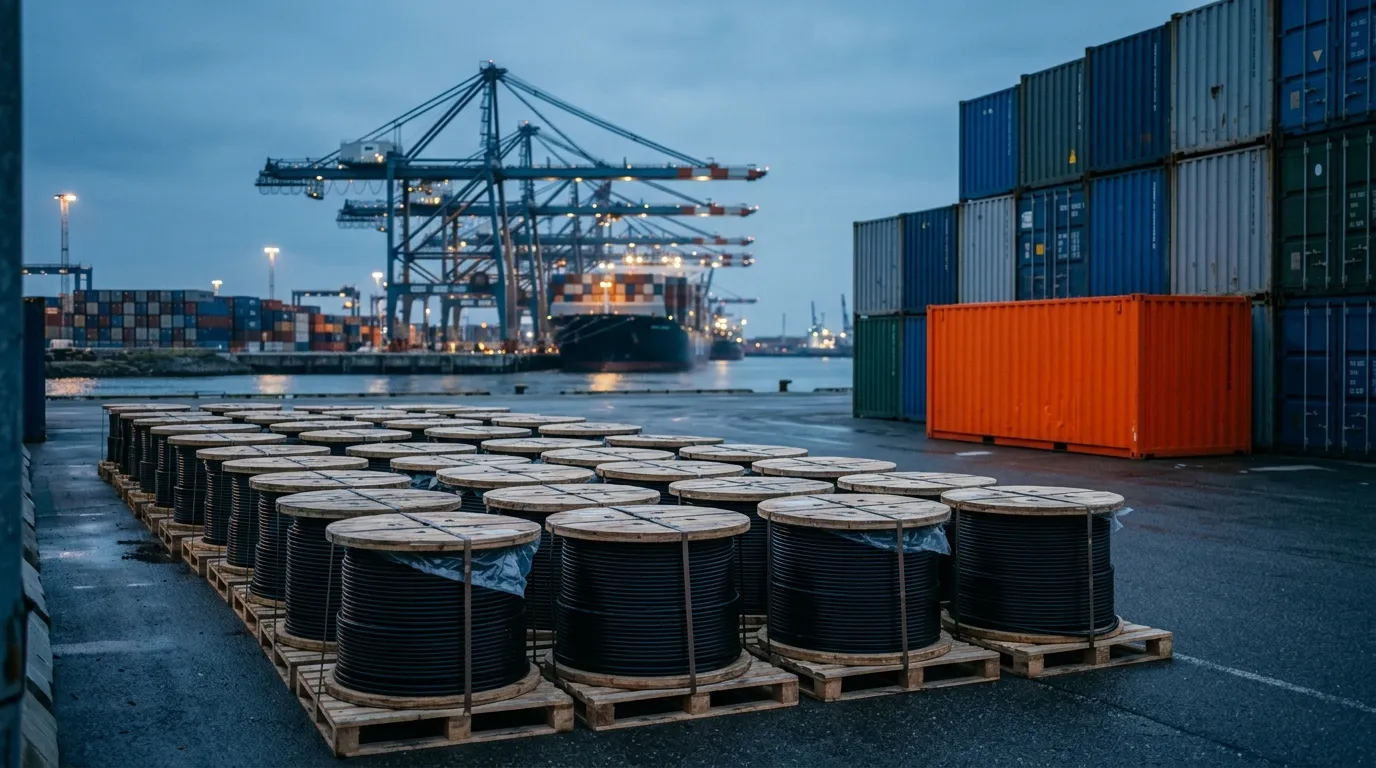
Origin and logistics are now first-order sourcing criteria — Vietnam-origin manufacturing is a growing option for tariff-sensitive US projects.
YOFC — the world's largest fiber maker
YOFC (Yangtze Optical Fibre and Cable) describes itself as the world's largest optical fibre preform, fibre, and cable manufacturer — the scale player in the global industry, and the fiber supplier behind a large share of the world's cable. Best for: very large-scale fiber and cable procurement where only tier-one volume matters. Honest limitation: big-company process and limited appetite for small custom orders; note that YOFC's website was unreachable from our network at the time of writing, so verify current product details and contacts directly through your normal trade channels.
Hengtong — full-line giant with submarine capability
Hengtong Optic-Electric covers the full spectrum from OSP and FTTH cable to submarine cable and energy systems, making it one of the most complete Chinese manufacturers (see the Hengtong corporate site). Best for: large OSP, FTTH, and energy-linked projects where one supplier handles scale. Honest limitation: project-scale orientation and lead times that suit big programs better than fast-turnaround mid-volume orders.
FiberHome — the carrier ecosystem supplier
FiberHome pairs fiber optic cable with telecom equipment — transmission, access, and ODN gear — which makes it a natural fit where its equipment is already in the network (FiberHome products). Best for: carrier projects inside the FiberHome ecosystem, where cable and equipment can be procured together. Honest limitation: equipment-bundle sales emphasis means standalone cable buyers get less attention.
DYS Fiber Optic — the OEM/ODM partner for custom specs
DYS Fiber Optic is a 17-year OEM/ODM manufacturer (est. 2009): factories in Huizhou, Mianyang, and Vietnam, 600+ staff, 800 km/day cable output, in-house mold and injection shop. Its certifications — ISO 9001/14001/45001, TL 9000, UL (OFNP/OFNR), CPR (B2ca/DCa/ECA), RoHS/REACH, Anatel — serve US, EU, and Brazil, with 100% pre-shipment testing (OEM/ODM). Best for: US/EU importers needing custom specs (jacket, color, fiber count, printing, packaging), mid volumes, Vietnam-origin production. Honest limitation: DYS does not draw optical fiber; its scale sits below the Corning/YOFC tier.
Also notable globally: Fujikura and Sumitomo Electric (Japanese majors with global plant networks), Nexans (France), ZTT (China), and Sterlite Technologies (India) — all credible names worth including in any global shortlist.
US manufacturer or global OEM/ODM? A quick comparison
Manufacturer | Base | Best for | Notable certifications | Pricing |
|---|---|---|---|---|
Corning | USA (NY) | Carrier & OSP scale, engineered fiber | UL, ISO 9001 | Quote-based |
Prysmian | USA + Italy | Power + comms large projects | UL, ISO 9001 | Quote-based |
OFS / Lightera | USA (GA) | Specialty and US-made fiber | ISO 9001 | Quote-based |
CommScope | USA (NC) | End-to-end network bundles | UL, ISO 9001 | Quote-based |
AFL | USA (SC) | Field construction + splicing | ISO 9001 | Quote-based |
OCC | USA (VA) | Military & industrial ruggedized | ISO 9001 | Quote-based |
Hengtong | China | Large OSP & subsea projects | ISO 9001 | Quote-based |
FiberHome | China | Carrier ecosystems | ISO 9001 | Quote-based |
DYS Fiber Optic | China + Vietnam | OEM/ODM customization, mid volume | UL, CPR, Anatel, TL 9000, ISO | Quote-based |
All commercial terms are quote-based and change frequently — treat the table as a shortlist, not a price list. The buying decision comes down to three profiles:
- Compliance-driven or Buy-American projects (government, defense, utility spec books): stay in the US tier — Corning, Prysmian, OCC.
- Custom specs, mid volumes, cost sensitivity (the majority of importer projects): the OEM/ODM tier — DYS and comparable manufacturers — exists for exactly this.
- Commodity volume at lowest cost per km with tolerance for long lead times and tariff exposure: the Chinese giants — Hengtong, ZTT, FiberHome.
How to shortlist and verify a manufacturer
A shortlist is only as good as the verification behind it, whether you're comparing fiber optic cable suppliers for the first time or auditing a candidate you've worked with for years. Six steps before you commit:
- Verify certifications, don't just collect PDFs. Look up UL-listed products in the UL Product iQ database and check the certificate number against the issuing body — the traps here are covered in our guide to verifying a supplier's UL listing, linked in the evaluation framework above.
- Demand batch test data. Ask for OTDR traces and insertion-loss records from the last three production batches of a cable like yours — if the supplier can't produce them, that's an answer in itself.
- Audit the factory, in person or on video. Production lines, QC lab staffing and calibration, warehouse organization, and incoming-material traceability. A dated video walkthrough is a reasonable first pass; a physical audit is the gold standard.
- Test samples to your spec. Measure end-to-end loss on both ends, inspect end faces, and stress-test the jacket if your application is harsh.
- Get MOQ, lead time, and penalties in writing. Volume discounts and sample policies are negotiable; delivery dates are contract terms.
- Check references and origin documents. Ask for customer references in your market and origin certificates (or country-of-origin statements) that match the production site you were quoted.
For a deeper walkthrough of the whole selection process — including what a factory audit should cover and how to structure OEM/ODM agreements — start with our full guide to choosing a fiber optic cable manufacturer.
Fast answers
Who is the largest fiber optic cable manufacturer in the US? Corning is generally regarded as the largest optical fiber producer with major US fiber and cable manufacturing; Prysmian is the largest cable manufacturer overall, with substantial US operations.
Where is Corning fiber optic cable manufactured? Corning draws optical fiber and manufactures cable at multiple US plants, concentrated in North Carolina — its Wilmington fiber plant and Concord cable plant are the best-known sites.
What is the best fiber optic cable brand? There is no single best brand — it depends on your spec and project. Corning leads for scale and engineered fiber, CommScope for network bundles, OCC for ruggedized environments, and OEM/ODM manufacturers like DYS for custom-spec import programs.
Your next step
You now have the framework and the names. Turn the five criteria into an RFQ, shortlist three suppliers across the US and global tiers, and run the six verification steps. If your project has custom specs, mid-volume requirements, or a Vietnam-origin preference, send us your spec sheet and we'll respond with feasibility, certifications, and a lead-time estimate.