

FTTA / 5G
FTTA Meaning: Fiber to the Antenna for 4G/5G Sites
FTTA (fiber to the antenna) is a cell-site architecture in which optical fiber carries the fronthaul link from the baseband unit (BBU) at the bottom of the tower up to remote radio units (RRUs) mounted at the top, replacing the heavy coaxial cable that older sites used.
FTTA stands for fiber to the antenna — not the religious training organization that shares the acronym, which is why this article says it outright. If you work with cell towers, macro sites, or 5G rollouts, FTTA is the cabling architecture you will keep meeting: it is how 4G densification got built and how most 5G sites are wired today. Below is what FTTA is, how it works, what a full run consists of, and what to check when you are specifying the hardware for one.
What Is FTTA? Why Coax Lost the Tower Run
A cell site does one job: turn baseband processing into radio coverage. For decades, the connection between the base station equipment at ground level and the antennas at the top of the tower was a thick coaxial cable. Coax worked, but it had three problems that got worse as networks grew:
- Weight and wind load. A 1-1/2 to 2 inch (40-50 mm) coax run is heavy, and every kilogram at the top of a tower increases wind loading and structural cost. A site that once carried three antennas now carries a dozen or more, and towers were never designed for that much coax.
- Distance limits. Coax attenuates RF signals quickly. In practice that confined the radio equipment to within roughly 100 m of the antenna — which is why radios historically sat in a hut at the base.
- Loss at high frequencies. The higher the frequency band, the worse coax behaves. The bands 5G uses make the problem worse, not better.
Fiber solves all three. One small optical cable replaces multiple coax runs, drops the weight and wind load dramatically, and can carry a signal tens of kilometers with negligible loss. That is the whole reason FTTA exists: it is the transport that lets operators move the radio up the tower and keep the baseband processing down below. For a broader comparison of the two media, see fiber vs. copper cable in telecom networks.
How an FTTA Architecture Works
In an FTTA site, the chain looks like this:
- The BBU (baseband unit) sits at the bottom of the tower — in a cabinet, a shelter, or in some designs a centralized "BBU hotel" several kilometers away.
- A fiber riser cable runs from the BBU up the tower. This link is the fronthaul: it carries digitized baseband signals to and from the radio.
- At the top, a remote radio unit (RRU or RRH) converts the digital optical signal back to RF and amplifies it.
- A short coax or jumper cable — often under a meter — connects the RRU to the antenna element itself. That final hop stays RF because it is short and shielded.
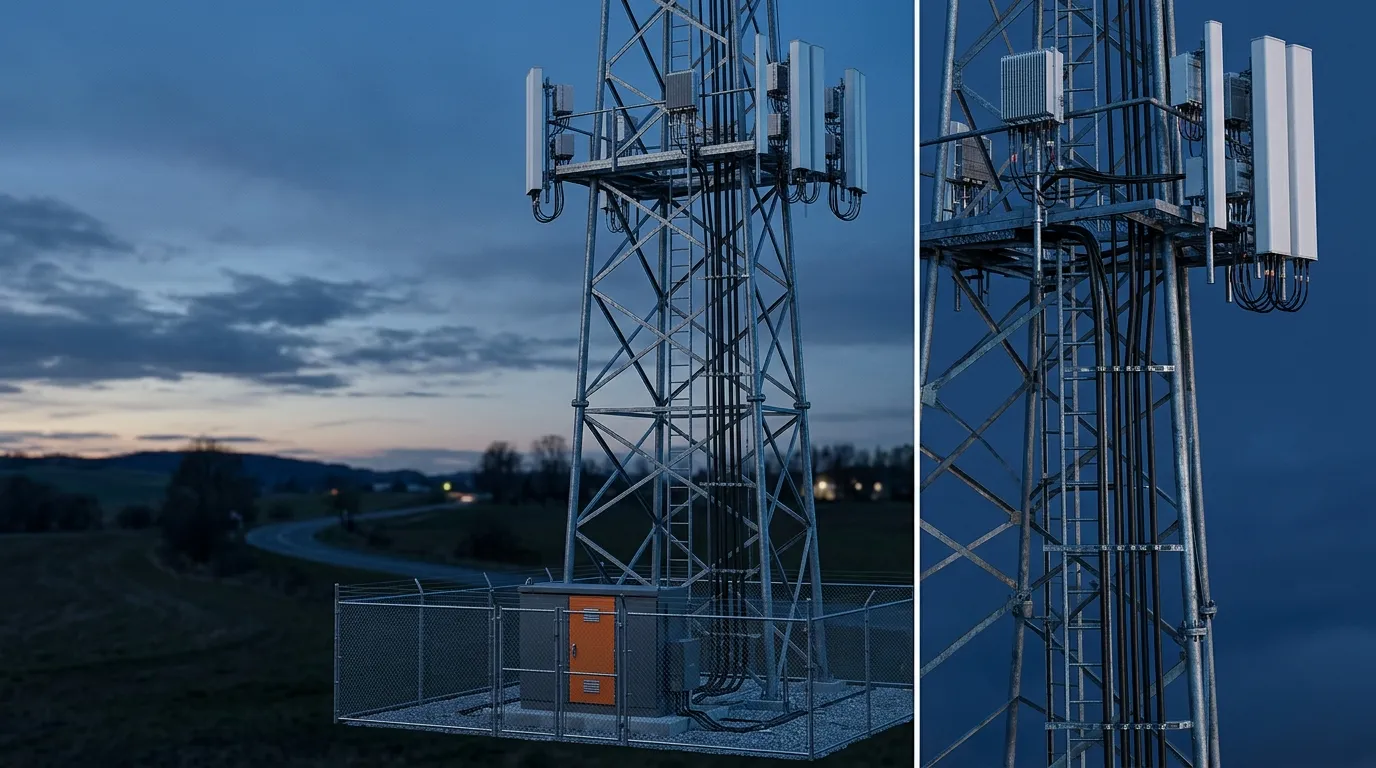
The signal format on that fiber is defined by the CPRI specification (Common Public Radio Interface) or its 5G successor eCPRI; both are what "fronthaul" refers to in RAN planning. Some FTTA runs use hybrid cables that bundle the optical fibers with copper conductors, so one assembly delivers both signal and DC power to the RRU — one pull up the tower instead of two. And because radios no longer need to be within 100 m of the antenna, operators can centralize baseband processing, which is one of the quiet cost advantages of FTTA.
What an FTTA Run Is Made Of
The components in a tower run are not exotic, but they are held to outdoor standards that indoor cabling never faces. Working top to bottom:
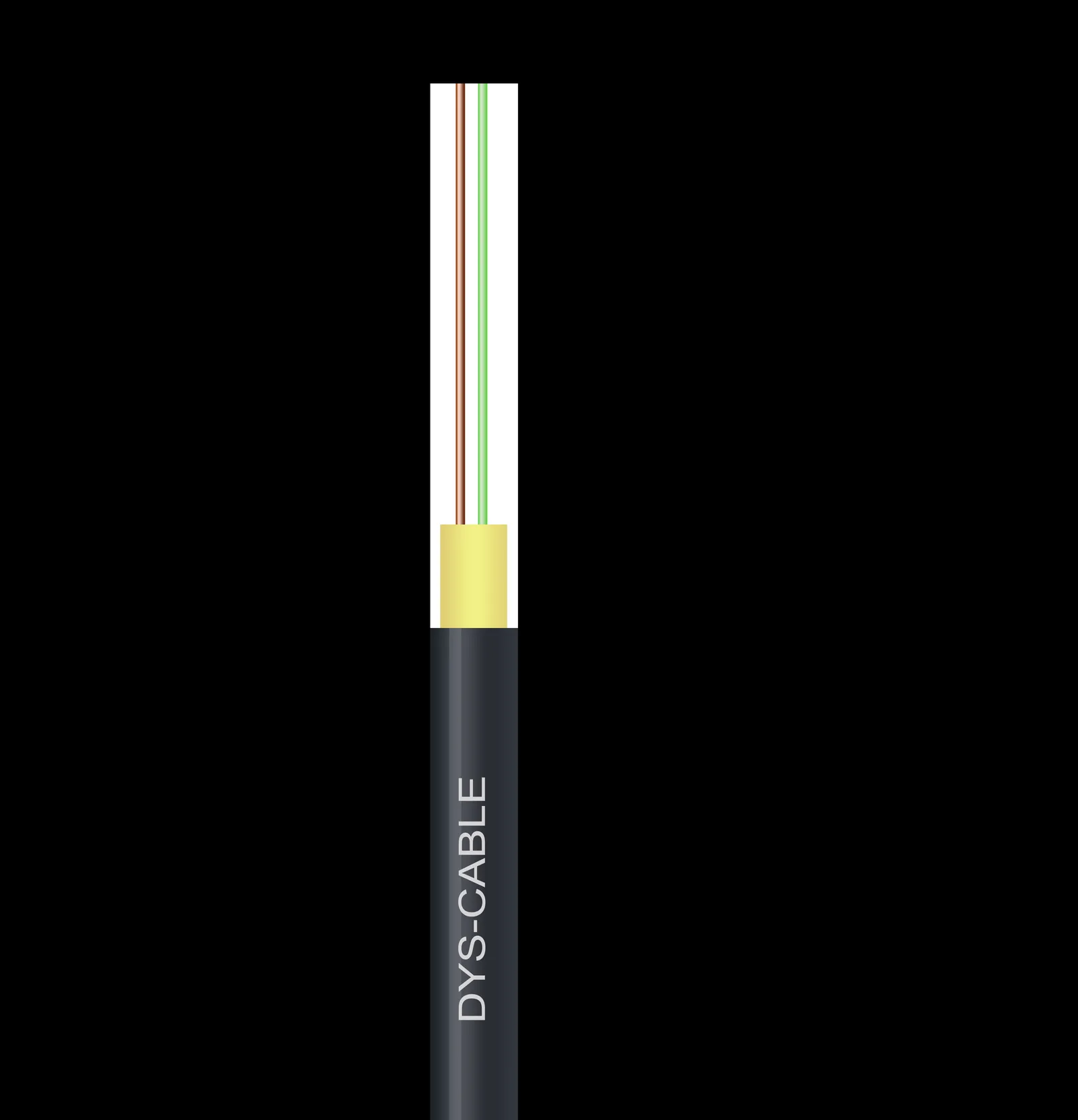
The cable. FTTA risers are almost always single-mode fiber — the ITU-T G.652 family is the standard reference — because tower runs can be long and 5G fronthaul distances keep growing. Beyond the fiber itself, the construction details matter more than most buyers expect:
- Subcables around 2.0 mm keep the bundle small enough to fit tower cable ladders and conduit without exceeding bundle limits.
- Aramid yarn strength members give the cable its tensile rating without metal — no metallic element means no EMI coupling and no lightning path into the radio.
- Jacket choice is the outdoor-reliability decision: PE for UV- and moisture-exposed outdoor sections, LSZH where the cable enters indoor or confined spaces, TPU where abrasion or harsh handling is expected.
- Operating range for these cables is typically -40 to +70 °C, with crush and bend-radius ratings sized for tower installation and wind-induced movement.
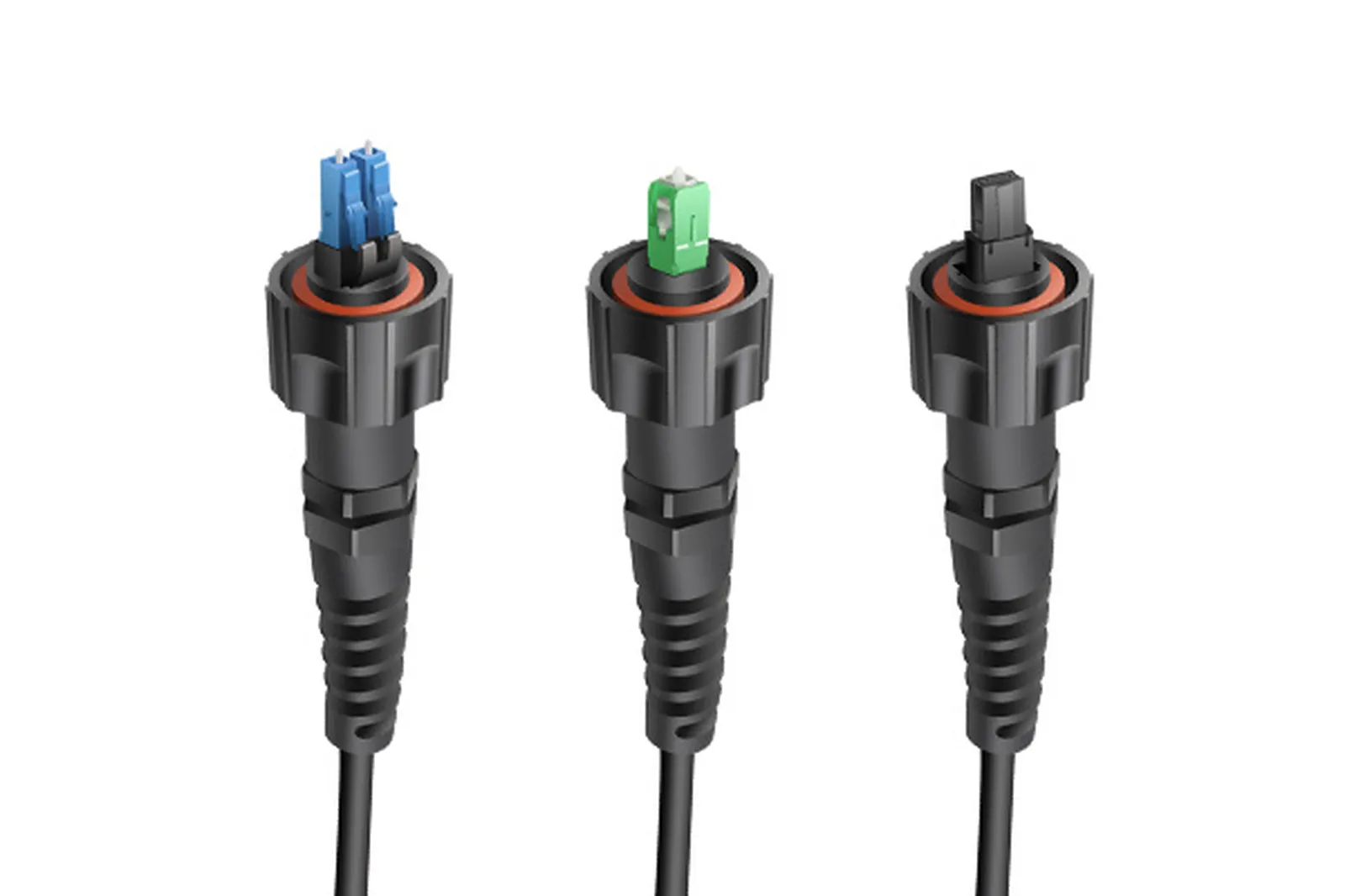
The terminations. Inside the cabinet and at the RRU, LC and SC connectors are the norm. Where the cable passes through the outdoor environment — typically at the RRU jumper and at the tower base — the connector is the weak point, which is why FTTA installations use waterproof connector families rated IP68 (ODVA, NSN, ODC, FullAXS, and PDLC are the common ones). A connector that leaks water or lets vibration loosen the ferrule will show up as intermittent faults and truck rolls, not as a clean failure.
Pre-terminated vs. field-terminated. Most FTTA cable is supplied as pre-terminated assemblies: factory-polished and tested ends that are hoisted into place, because splicing or polishing on a tower is slow, weather-dependent, and error-prone. The Fiber Optic Association's FTTA reference makes the same point — termination difficulty on the tower is the reason prefabricated assemblies dominate.
FTTA vs. FTTH vs. DAS: Know the Difference
The FTTx acronyms get mixed up constantly, and the differences matter when you are ordering cable:
FTTA | FTTH | DAS | |
|---|---|---|---|
What it connects | BBU to remote radio unit | OLT to subscriber premises | Head-end to indoor antennas |
Where it lives | Cell towers, rooftops, small cells | Homes, MDUs, businesses | Buildings, stadiums, tunnels |
Signal it carries | Digitized fronthaul (CPRI/eCPRI) | Ethernet/PON optical signals | RF over fiber or coax |
Typical buyer | MNOs, TowerCos, integrators | ISPs, broadband operators | Venue owners, integrators |
FTTH (fiber to the home) is a completely different network — it ends at a subscriber's ONT, not at a radio. If you are working on last-mile access networks, see our FTTH drop cable guide instead. DAS (distributed antenna systems) is indoor coverage; it shares the "fiber to a radio" idea but lives inside buildings. Small cells sit somewhere in between: miniature FTTA-style sites that are multiplying fast as 5G densification spreads, which is one reason open-RAN initiatives like the O-RAN Alliance treat fronthaul transport as a standard interface rather than a vendor-specific black box.
What to Look for When Specifying FTTA Cabling
If you are putting together an RFQ for FTTA hardware, work through this checklist:
- Environmental rating. Confirm the IP rating of every outdoor connector (IP68 is the benchmark) and the cable's UV resistance and temperature range. Tower-top hardware lives in sun, ice, and wind — indoor-grade parts will fail inside the warranty period.
- Mechanical specs. Ask for tensile strength (short- and long-term), crush resistance, and dynamic/static bend radius in writing, and compare them against your tower's cable-ladder and conduit constraints.
- Fiber and connector type. Single-mode fiber, LC/SC at the patch points, and the specific waterproof connector family your RRU vendor supports — ODVA, NSN, ODC, and the others are not interchangeable.
- Pre-termination and test data. Factory-terminated assemblies should ship with insertion loss and return loss measurements per end. If a supplier cannot produce per-assembly test data, that is a red flag, not a negotiating point.
- Certifications and compliance. For EU projects check CPR fire-rating compliance; for US projects, UL listings; for Brazil, Anatel. A supplier that can't document the certification your market requires will stall your site acceptance.
- Volume and lead time. Densification programs order hundreds of sites in parallel. Ask about daily assembly capacity, not just unit price — a supplier with dedicated FTTA assembly lines can usually answer both questions in one quote.
The Bottom Line
FTTA is not a technology trend — it is the current physics of cell sites: fiber up the tower, radio at the top, coax only for the last meter. If you are planning or upgrading 4G/5G sites, the architecture decisions that matter are the outdoor-rated cable, the waterproof termination, and a supplier who can deliver tested assemblies at densification volume. That is the full picture in brief; the complete treatment — including CPRI link design and connector selection in depth — lives in our FTTA and 5G fiber guide. For the hardware side, DYS Fiber Optic builds a purpose-built FTTA cable family (waterproof indoor/outdoor variants, aramid strength members, 2.0 mm subcables) and a full range of IP68 outdoor connectors; you can review both on the FTTA solution page and request samples for testing.